Tuesday, June 21, 2016

Make Way for Myra

 
1970 was the first and only year that an X-rated film won the Academy Award for Best Picture. (No, not this one...that was Midnight Cowboy.) But America’s then-reigning sex symbol and the top box office blonde of yesteryear appeared together in an X-rated film in 1970 too.

Myra Breckinridge (1970) will go down in history as one of the weirdest films ever made. An ignominious flop when it was first released—and rightly so!—its lethal brand of camp and unforgettable imagery and performances have elevated it to cult status, where we hope it will remain in perpetuity. This outrageous tale of a transsexual anti-heroine is a product of its era, the height of the so-called sexual revolution, but its flamboyant bad taste and balls-out bravado are astonishing even today. 

Raquel Welch in the title role
Based upon the novel by the prolific and famously bisexual writer Gore Vidal (who also wrote those page-turners of historical fiction 1876, Lincoln and Burr), the film version of Myra plays upon the worst fears of every right-wing conspiracy regarding the sexual revolution and the so-called gay agenda. Everything that scares people about homosexuality (and any other sexuality, for that matter) is exaggerated and lampooned with perverse democracy.

If you’ve never read the book of Myra (or Myron, its equally entertaining sequel), it may be hard to discern in the film version that mild-mannered Myron, played by Rex Reed in his first and only acting role, undergoes a sex-change operation and becomes his alter-ego and evil twin, the gorgeous Myra, who bears more than a passing resemblance to Raquel Welch, then Hollywood’s top glamour girl. At the end of the film, it all makes sense though—spoiler alert—it was all a dream. Myron never had his you-know-what chopped off, after all…

Rex Reed as Myron: "Where are my t*ts?"

Helmed by hippie British director Michael Sarne (Joanna) who freely admitted to sneaking off the set to smoke the occasional joint between takes, the movie is a strange melange, episodic and tangential,  with a hard-to-follow storyline that makes very little sense, but does it really need to, with all that gratuitous nudity and debauchery? Here’s the theme in a nutshell, in the heroine’s own words: “I am Myra Breckinridge, who no man will ever possess...my goal is the destruction of the American male in all his particulars.” And how!

Punctuating the narrative for satiric effect, and probably further confusing the situation, are numerous clips from classic Fox films, as stars like Jack Benny, Dietrich (in drag, of course), Laurel & Hardy, Judy Garland and Alice Faye (singing “America, I Love You”) pop into the action for editorial effect. Republican Shirley Temple Black, then the U.S. Ambassador to the United Nations, was incensed by the film’s use of her classic numbers  “You’ve Got to S-M-I-L-E” and “On the Good Ship Lollypop.” Temple sued, as did Loretta Young. 

Huston, Welch, West and Reed
Myra marked the return to the screen of the legendary Mae West after a 26-year absence. In the supporting role of Tinseltown super-agent (and recording artist!) Leticia Van Allen, West nevertheless received top billing. Despite her mummified and waxen appearance, the legendary superstar still displays glimmers of her iconic wit in her few brief scenes, mostly as Leticia interviews much-younger would-be clients and potential bedmates. “Forget about the 6 feet...let’s talk about the 7 inches…” she purrs to a tall and strapping wannabe actor. Referring to a pair of handsome identical twins, she tosses her head and declares, “I’m the only one who knows the difference.” As Leticia, Mae has only one goal: to add to her “stable of studs” and create a “boy bank” since the “gay boys are taking over the business.” 

Mae West as Leticia Van Allen: "Male Clients Only"
“You Gotta Taste All the Fruit” is Mae’s obligatory musical number, performed by Leticia in salmon silk and sequins, carried onto the stage on a Cleopatra-like litter. Later, after another Edith Head costume change, Mae caterwauls her way to the big finish surrounded by a bevy of tuxedoed black men doing a frantic frug (with an assist from a clip of Carmen Miranda and her giant bananas and Tutti-Frutti hat!). It truly has to be seen to be believed.

Film critic Rex Reed is surprisingly photogenic and affable as Myron, especially when singing a song called “My Secret Place” by the Mamas and the Papas’ John Phillips, and when grabbing his chest and exclaiming “Where are my tits?” in his inimitable southern drawl.

Myra and Mary Ann (Farrah Fawcett)
The film also jump-started the careers of two soon-to-be TV icons. A young Tom Selleck, sans moustache, makes a brief appearance as one of Leticia Van Allen’s victims--er, clients. Farrah Fawcett, six years before she became an Angel, is adorably virginal as one of acting teacher Myra’s star students. 

Myra and Rusty (Roger Herren)

Roger Herren is perfect as the dumb-as-a-post Rusty, the unfortunate Midnight Cowboy-type forced to submit to the will of unstoppable man-hating rapist Myra. John Huston, better known as director of classics including The Maltese Falcon and The African Queen, is amusing in one of his few onscreen turns as the former Western star who now runs an acting school.

But the film really belongs to its titular (sorry, I couldn’t resist) star. As the transsexual alter ego of Myron Breckinridge, Raquel Welch walks away with the film, displaying a brilliant flair for dark comedy. Myra's serious-as-a-heart-attack militant feminism is brought to hilarious life by the skilled Welch, who keeps her tongue planted firmly in her cheek in her quest of “preparing humanity for its next phase”... the emasculination of America, of course.

Whether teaching a class on 1940s film acting, boogy-woogying to “Chattanooga Choo Choo,” seducing both Fawcett and her alter-ego Reed, or riding poor Rusty hard and putting him away wet (while poured into that revealing red, white and blue swimsuit), a confident Welch dominates in every scene. Wham, bam, thank you, ma’am!

Myra prepares to spill her "t"

No wonder that Mae West refused to appear in a two-shot with the young and energetic Welch. In the finished film, the pair have only one scene together. The encounter precipitated the only hint of a feud between the two female stars, a black-and-white war of sorts, with Welch in a Theodora Van Runkle black suit, trimmed with white ruffles, vs. West in an all-white Edith Head ensemble pierced by a black veil. West thought she had vetoed Welch’s wardrobe, commandeering the non-colors for herself, but Welch pulled rank and refused to do the scene unless she wore black and white as well. They filmed the sequence without incident, but never appeared in the same frame. (A couple of years later, West was asked how it was to work with Welch. “She was nice,” purred Mae, but her famous eye roll gave her away and her audience exploded into knowing laughter.)

How anyone thought this mess of a film would be a commercial success is one of those unsolved Hollywood mysteries. It truly fell between the chairs in its appeal for 1970 audiences. The older generation who might have appreciated all the classic film references were shocked and appalled, and younger, hip moviegoers were totally uninterested.  It is, to be sure, an acquired taste…nostalgic gay camp with an edgy undercurrent, drug-fueled and a little cockeyed.

Wednesday, June 01, 2016

A Longtime Gay Classic


In the 1980s, the rise of the independent film gave us a window on the world largely unseen in mainstream entertainment and storytelling. Gay-themed stories were being told brilliantly and poignantly in films like Maurice, Parting Glances, My Beautiful Laundrette and Prick Up Your Ears. Longtime Companion (1989) is one of the very best of that period.

The film is among the very first to deal head-on with the onset of the AIDS epidemic; Longtime Companion chronicles its devastating effects on a group of NYC friends and acquaintances, many in the entertainment industry. Without pulling any punches, it illustrates how the horrifying mystery illness began its deadly toll on young urban men, forcing the gay community to stand up and be counted. Visibility of gay people in American life was an important first step in gaining support for combating the AIDS crisis, and would prove to be just as important for the LGBT rights movement overall. 

Willy (Campbell Scott) and Fuzzy (Stephen Caffrey)
Longtime Companion is set among these beginnings of awareness and political activism, but is mostly an intimate story about love and loss and friendship and hope, educating heterosexual viewers of the late 1980s that their gay brothers and sisters are truly a part of one human family. (Indeed, one slogan appearing on many of the movie posters was “a motion picture for everyone.”) The original screenplay by Craig Lucas (Prelude to a Kiss, The Dying Gaul) is moving, funny and heartbreaking, and brought to life by an ensemble of masterful actors.

Like its counterpart The Normal Heart (the play by Larry Kramer written in the 1980s but not made into a film until 2014), the narrative begins in Fire Island on July 3, 1981, the day the New York Times published its first article about the cancer affecting the gay community. 

Fuzzy and Lisa (Mary-Louise Parker)
Indeed, the HBO film of The Normal Heart pays homage to Longtime Companion’s opening sequence, which depicts the sexy, risqué fun and decadence of a Fire Island summer set to the tune of Blondie’s “The Tide is High.” But flesh and frivolity gives way to serious concern and ultimate tragedy as one by one, friends and loved ones are felled by the dread disease. 

The cast is first-rate, particularly Bruce Davison (Short Eyes, Mame), who earned an Oscar nomination for Best Supporting Actor for his portrait of a stalwart caregiver who encourages his partner (Mark Lamos) to let go of the pain and agony at a bedside death vigil. And Campbell Scott’s halting eulogy to the Bruce Davison character later in the film is equally moving, eliciting both tears and laughter.

Bob (Brian Cousins) and Michael (Michael Schoeffling)
 
Patrick Cassidy as Howard

As the first member of the circle of friends to fall ill with the mystery disease, succumbing to pneumonia,  Dermot Mulroney (My Best Friend’s Wedding) is at first young, adorable and full of lively humor, then devastatingly heartbreaking, struggling to breathe in a tense emergency room scene, underlining the disease’s relentless attack on young men in the prime of life. 

Dermot Mulroney as John
Michael Schoeffling (Sixteen Candles) and Brian Cousins are charming as the young couple who turn to New Age positive thinking, vitamin supplements and naturopathic remedies to help their ailing friends and keep their own personal fears and terrors at bay. 

David (Bruce Davison) urges Sean (Mark Lamos) to let go...

Patrick Cassidy (brother of Shawn and and half-brother of David) is effective as the hunky soap opera actor who watches his lover (John Dossett) die while struggling to live and work under the stigma of HIV. The soap opera scene, where everyone gathers in front of the TV to see the first gay kiss on daytime television (which was not to occur in real life for a decade or more), shows us how hungry gay people were to be represented and accepted in popular entertainment media. (Hard to believe now that to be gay before the 1980s was to be practically invisible in mainstream media.)

A very special episode of the daytime drama "Other People"

Mary Louise Parker, before Angels in America and Weeds, adds refreshing humor and fierce humanity to her role as devoted friend and—pardon the expression—fag hag to Fuzzy (Stephen Caffrey ), an entertainment lawyer, and his new lover Willy (Campbell Scott). Together, they devote themselves to easing the pain of others through volunteering for the Gay Men’s Health Crisis.

The closing of the film, which brings us back to the beach as the protagonists imagine the joyful day the cure for AIDS is found, is memorable and still sob-inducing for those who lived through these troubled times. 

The ending always makes me cry
Establishment cinema, always slow to catch up with the indie film’s finger on the pulse of collective consciousness, would have to wait a few years before the subject of AIDS became the focus of a major motion picture. It was not until Oscar graced the film Philadelphia (1994) and its star Tom Hanks (our generation’s Spencer Tracy?) that an open discourse on the subject of AIDS and its effect on the fabric of everyone’s lives went mainstream.

Since June is traditionally Gay Pride month, today I’m inspired to share my passion for one of my all-time favorite gay-themed films. If you’ve never seen it, it is definitely worth a look.  


Monday, May 16, 2016

The Queen of Mean


When a 2016 presidential candidate was recently described as “Lucifer in the flesh,” the first image to flash into my mind was not a politician at all, but rather a slim, elegant and impeccably dressed woman played in a movie by Meryl Streep.

Based upon Lauren Weisberger’s roman a clef novel, inspired by a stint as assistant to none other than Vogue maven Anna Wintour, The Devil Wears Prada (2006) is given a slick and entertaining film treatment by director David Frankel and features fabulous fashions, sumptuous production design and engaging performances by a bevy of attractive and talented actors. But the film really belongs to just one person, in the eponymous title role.

Meryl Streep as the Devil incarnate

The character of Runway editrix Miranda Priestly joins the ranks of cinema’s greatest female bosses from hell including Joan Crawford’s Amanda Farrow in The Best of Everything, Susan Hayward’s Helen Lawson in Valley of the Dolls, and Sigourney Weaver’s Katharine Parker in Working Girl. Miranda is brought to terrifying life with brilliant precision by the most multifaceted actress of all, Meryl Streep, who earned a richly deserved Academy Award nomination for the role. (If only she had won that third Oscar for this juicy part, and not as a bucktoothed and boring Margaret Thatcher!)

Miranda Priestly is everything an iconic screen villain should be—an irresistible combination of beauty, brains and cruelty. She’s narcissistic and self-centered; talented and driven; ruthless and cold-blooded;  in short, a glamorous embodiment of pure and unadulterated evil. 

Miranda Priestly, editor of Runway magazine

Streep takes great pains to fashion a completely original character in Miranda, who looks and sounds nothing at all like Anna Wintour. Instead, Streep cleverly makes her antiheroine a soft-spoken dragon lady; her vicious putdowns and catty remarks are all uttered sotto voce, with ladylike deportment. But her murmured asides are skillfully designed for systematically belittling, criticizing and dismissing her long-suffering staff, who exist only to please her. But the mere pursing of her lips in displeasure is “a catastrophe.” Her opinion is the only one that matters.

Anne Hathaway as Andrea Sachs

Giving an endlessly long string of orders to her assistants in a hushed monotone, demolishing deadlines and rescheduling meetings, the Queen Bee then sighs with weary disappointment when her worker bees and drones fail to fulfill her commands quickly or efficiently enough. “It’s baffling to me, confusing to me“ she sighs in quiet exasperation, “Why is no one ready?”

Stylish, poised and supremely self-possessed, and fortified by a healthy case of borderline personality disorder, Miranda cuts a swath of pure terror through the Runway offices. Her few redeeming qualities — talent, a singular focus and a steely determination to survive in the shark-infested waters of the New York fashion pool—do little to offset her hard-as-nails persona.

Here she comes: "Gird your loins"
Described by other characters as “a notorious sadist” who is “not happy unless everyone around her is panicked, nauseous or suicidal,” Miranda is as iconic as Cruella deVil and Mommie Dearest, minus the cartoon campiness. Streep imbues the character with disturbing reality.

Perfectly playing Snow White to Streep’s glamorous Wicked Queen is Anne Hathaway in one of her most winning roles. As fresh-faced Northwestern graduate Andrea Sachs, who reluctantly takes the job of second assistant to Miranda, Hathaway arrives fully prepared to pay her dues, but doesn’t yet realize she’ll be paying in tears, toil and blood. (And by changing every aspect of her appearance to measure up to the fashion industry’s impossibly high standards. Hard to believe that the willowy Hathaway is shamed for eating and described as “fat” by her new coworkers.)

Andrea and Emily (Emily Blunt)

Nigel (Stanley Tucci) and Miranda

The ice queen puts her new assistant through her paces, treating her like dirt when she acknowledges her presence at all, damning her with the faintest of praise. Like a starving animal, Andrea eagerly laps up the few crumbs of approval that are offered by her new employer. Then, in true Faustian fairy tale fashion, Andrea becomes the girl Miranda wants her to be, ditching her friends, lover and personal integrity in the process.

Though Andrea enjoys a personal happy ending, walking out on Miranda and getting her dream job as a newspaper reporter, the villain is far from vanquished at the close of this story. Ultimately, it is her power that allows Andrea to get her next job; ironically confirming that Miranda’s influence will probably continue, undiminished, perhaps indefinitely. Evil triumphs!

Nate (Adrian Grenier) and Andy
Simon Baker as Christian

Though Streep and Hathaway dominate here, they’re bolstered by an impressive cast and production that make the film an utter delight to watch again and again. Brilliant supporting performances by Emily Blunt as a bitchy Miranda mini-me and Stanley Tucci as a twitchy gay fashion director (sharp-tongued but with a heart of gold, of course!) are perfect foils for Miranda and Andrea. Adrian Grenier and Simon Baker add some tempting male eye candy to the proceedings. Costume designer Patricia Field (Sex and the City) captures the fashion zeitgeist of that moment, and the soundtrack and cinematography capture the mood and magic of the New York and Paris fashion worlds.

Though Meryl Streep has aced practically every kind of role imaginable, like most actors she really seems to relish this rare opportunity to play an out-and-out evil bitch. And a decade later, it remains one of her most memorable roles. 


Thanks to Speakeasy, Silver Screenings and Shadows and Satin for hosting The Great Villain Blogathon of 2016. So much fun to participate!

Monday, March 21, 2016

Elvis Kicks the Movie Habit


Have you seen the one where Mary Tyler Moore plays a nun opposite Elvis Presley as a doctor? More of a curiosity than a movie classic, Change of Habit (1969) has some surprisingly entertaining moments, and marked a turning point for both its iconic stars.

By the time he made Change of Habit, Elvis Presley had starred in 30 films, the lion’s share of them puerile, formulaic vehicles designed to exploit his manufactured rock star image for commercial gain. Ironically, his film career had basically killed his record sales, as most of the music in Elvis’s films was studio-manufactured pablum that he could barely stand performing. (To me, Elvis on screen is like the male Doris Day...trapped by a stereotypical image and one-dimensional, cookie-cutter film roles, his talent and versatility rarely fully realized.)


Elvis Presley as John Carpenter
At the beginning of his film career, Elvis had longed to be taken seriously as an actor. Indeed, in his 1956 movie debut in the sentimental western Love Me Tender, he had been compared to James Dean. Strong performances in the early films including Loving You, Jailhouse Rock and the Clifford Odets drama Wild in the Country gave way to a decade of mindless Technicolor fluff. Though there were some momentary flashes of fun and brilliance in films like Blue Hawaii and Viva Las Vegas, Presley’s dramatic promise was never fulfilled.

By the late ’60s, Elvis was disenchanted with both his film contract at MGM and his music, both controlled by his longtime manager Colonel Tom Parker, and he had already begun to put his foot down and change the trajectory of his own career. Most recently, Elvis had taken hold of the artistic reins of a Christmas TV special he had been signed to do, and transformed it from a traditional holiday concert into his groundbreaking rock ‘n roll comeback special, performing before a live audience for the first time in years.


The doctor is in!
Change of Habit would offer a similar change of pace for Elvis’s movie image, though it’s still undoubtedly a star vehicle. For a light, G-rated comedy, the movie would touch on some sensitive and timely subject matter including poverty, heroin addiction, autism and rape, with some fairly frank dialogue and situations as well (a young girl is described as a “bitch,” and the well-dressed nuns out of their habits are mistaken for high-priced hookers.)

Elvis plays Dr. John Carpenter, an inner city doctor at a free clinic in a rough neighborhood who welcomes the help of three young nurses, who unbeknownst to him, are Catholic nuns. Of course, Elvis’s doctor also strums a guitar and sings, and our first glimpse of him is surrounded by young people grooving to his edgy rendition of “Rubberneckin.’” (Though he had to continue in a musical vein to bolster the film’s commercial viability, Elvis made sure that at least a couple of songs in the film were hip and up to date.)

Mary Tyler Moore as Michelle

In his last film role, Presley acquits himself nicely, bringing heart and charm to his role of inner city physician, displaying a real chemistry with his female costar as well as with the neighborhood kids he treats at the clinic. The Elvis charisma and iconography are still apparent, though, and the Christ-like symbolism surrounding him is hard to miss as the aptly named “Carpenter” is photographed under a stained glass window (and a bright Hollywood halo around him!) while performing a rousing rendition of “Let Us Pray” to a packed church crowd during the rock ‘n roll mass finale.

As he now turned to rekindling his passion for live performance, Elvis would never act again, although he appeared as himself in two MGM-released documentary concert films, Elvis: That’s the Way It Is and Elvis on Tour, and seriously considered but ultimately turned down producer Barbra Streisand’s offer to play the fading, drug-addicted rock star in the 1976 remake of A Star Is Born (a role perhaps too close to home).

Sinful thoughts, perhaps?
Change of Habit also marked a transition period for Mary Tyler Moore. After years as America’s TV sweetheart playing the adorable Laura Petrie on The Dick Van Dyke Show, Moore was having trouble finding a new niche. After the cancellation of Dick Van Dyke, Mary had experienced her first resounding flop on Broadway in an ill-fated musical adaptation of Breakfast at Tiffany’s opposite TV’s Dr. Kildare himself, Richard Chamberlain, and played a supporting role in the movie musical Thoroughly Modern Millie starring Julie Andrews. Change of Habit would be Moore’s last theatrical film for many years, just before finding her sweet spot back in the world of television.

Mary Tyler Moore revealed she was not exactly thrilled at the prospect of being the female lead in an Elvis movie, but her costar’s unfailing politeness, humility and work ethic helped make it a positive experience. She found Presley easy to work with, charming, sensitive and considerate, and admitted she had underestimated his acting ability.


Barbara McNair and Jane Elliot
Edward Asner
As Sister Michelle, who has a crisis of faith when she falls in love with the charismatic Dr. John Carpenter, Mary gives a solid performance, and she’s photographed beautifully. But it would be in her next big screen movie 11 years later in which she would enjoy her greatest cinema triumph, for the role that would earn her an Academy Award nomination in Robert Redford’s Ordinary People.

Though Change of Habit is made enjoyable largely by the chemistry and star power of Elvis and Mary Tyler Moore, the leads are ably supported by a likeable and talented cast including stunning actress/singer Barbara McNair (who unfortunately doesn’t get to sing a note here) and Jane Elliot (someday to become a long-running soap opera villainness) as Sister Michelle’s cohorts. Ed Asner (soon to team up with you-know-who in a new sitcom) is perfect in his small role as a wise and kind police officer.

Between Change of Habit and Ordinary People, of course, Mary Tyler Moore would turn the world on with her smile and the brilliantly written and acted ensemble TV series that bore her name. But remember, she turned Elvis on first, and was his final—and a quite formidable—costar.


Friday, February 26, 2016

The Best Actress of 1958—Auntie Roz


It’s absolutely incredible to me that so many of our greatest film stars never won an Oscar...Barbara Stanwyck, Cary Grant, Natalie Wood, Marlene Dietrich and Richard Burton come to mind. Rosalind Russell was nominated four times, and really should have won for Auntie Mame (1958).

In my opinion, Rosalind Russell’s iconic, bravura performance in the film adaptation of her Broadway triumph was the best performance by an actress in 1958 and should have copped her the golden statuette she had always so badly wanted to win. Though her competition that year included Elizabeth Taylor (as Maggie the Cat), Deborah Kerr, Shirley MacLaine and the winning turn by Susan Hayward (as convicted murderess Barbara Graham in I Want to Live!), the Oscar should have gone to Roz.

(Not that I don’t worship Miss Hayward; I do, but my favorite performance of hers was three years earlier, as alcoholic songstress Lillian Roth in I’ll Cry Tomorrow. But that’s another story...)

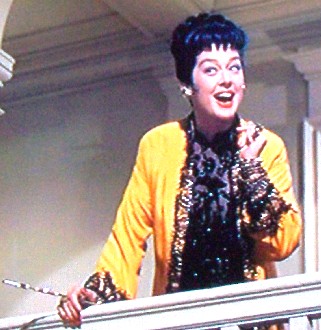
The many faces of Roz as Mame Dennis

By the time she received this Oscar nomination as Best Actress of 1958, Rosalind Russell was a mature and established actress who had paid her dues and survived a roller coaster of personal and show business ups and downs. Auntie Mame was the culmination of a life’s work and the apex and high point of her film career.

Though she would headline some high-profile movie projects throughout the next decade, most notably as Mama Rose in the musical Gypsy and as the Mother Superior in the comedy The Trouble with Angels and its sequel, Russell would never again experience the heights of critical acclaim and commercial success she had enjoyed with Auntie Mame. This would be her final Oscar nomination.

She had started in Hollywood as a supporting actor, albeit a glamorous one, under contract to MGM in the early 1930s, where she was usually cast as a humorless, wealthy British heiress who would lose her fiancé (William Powell or Clark Gable) to a more charismatic or street-smart leading lady (Katharine Hepburn or Jean Harlow). That she was so often cast as a Brit was a tribute to her acting ability, as she had been born in Waterbury, Connecticut!

"Are we all lit?" Roz ignites Fred Clark's Flaming Mame

Russell worked hard, progressing to dramatic leading lady roles, which she found equally dull to play, so she segued into comedy character parts, triumphing in the supporting role of the gum-chewing gossip Sylvia Fowler in The Women (1939) and then opposite Cary Grant in the classic screwball comedy His Girl Friday (1940).

It was through Grant that she would meet her husband, producer Frederick Brisson. In show business circles, Brisson was snidely referred to as The Lizard of Roz for his ruthless devotion to his wife’s career, buying up the rights to books and Broadway plays out from under other stars to commandeer their roles for herself. (Ethel Merman may well have coined the nickname for Brisson!)

Russell had come so close to winning the Oscar before. She had been nominated as Best Actress in 1942 for My Sister Eileen (losing to Greer Garson in the sentimental wartime favorite Mrs. Miniver) and in 1946 playing the real-life heroic nursing nun Sister Kenny (losing to Olivia deHavilland, finally winning her first statuette for To Each His Own).

But in 1947, Russell was the odds-on favorite to win for her performance in Eugene O’Neill’s heavily dramatic Mourning Becomes Electra. It was her turn...or so everyone thought, including Russell. Legend has it that the night of the ceremonies, our Miss Roz rose from her seat as the envelope was opened and the winner’s name read. Still standing, poor Roz was mortified to realize that it was Loretta Young’s name that had been called, for the light comedy The Farmer’s Daughter. Literally thinking on her feet, Russell gamely started a standing ovation for winner Young.

A toast to the original and best Mame
 Auntie Mame was her final acting nomination, though in 1973 she was awarded the prestigious Jean Hersholt Humanitarian Award, presented by her friend Frank Sinatra, for her tireless charity work. (Other recipients have included Elizabeth Taylor, George Clooney, Angelina Jolie and Debbie Reynolds.)

Mame Dennis is Rosalind Russell’s greatest and most enduring screen role, richly deserving of the Academy Award. Russell’s Mame has everything—humor, wit and hilarity; vulnerability, heart and emotion. It’s the story of a high-living Manhattan party girl whose life is transformed by love when her orphaned nephew comes to live with her, becoming the center of her universe. Through a series of comic (and tragic) misadventures, Mame imparts to Patrick her credo and philosophy: “Life is a banquet, and most poor suckers are starving to death.”

Mame’s first appearance is perhaps the greatest entrance in film history as she descends down a grand winding staircase at the height of a raucous cocktail party, trotting down the stairs at breakneck pace talking a mile a minute. All bets are off—you know you are in for one hell of a ride with this saucy dame!

"Help is on the way, darlings!"
Russell is the epitome of mature glamour in the ostentatious Orry-Kelly gowns that underline the flamboyancy of her character, but it’s her sheer charisma that carries this film. She is at turns wise, noble and loving, at other times as loco as Lucy Ricardo, but always every inch the grand lady. Roz commands the screen with her tour de force performance, creating a character that has become a lasting archetype in popular culture--everyone, it seems, has a delightfully off-kilter black sheep like Auntie Mame in their family.

In Auntie Mame, Russell is ably supported by a large cast of zany and lovable character actors, including Coral Browne as a drunken stage star, Forrest Tucker as a southern sugar daddy, Fred Clark doing a slow burn as Patrick’s conservative bank trustee, and best of all, Peggy Cass recreating her stage role as the shy and retiring secretary Agnes Gooch, who gets more than she bargained for when inspired by Mame’s memoir Live, Live, Live. (Miss Cass also earned a Best Supporting Actress Oscar nomination for her own iconic performance.)


Russell to Jan Handzlick as Patrick: "Your Auntie Mame is hung..."

As Mame’s nephew Patrick, Jan Handzlik (who also played the role on Broadway) enjoys great chemistry with Russell and allows her to show a softer, more vulnerable and maternal side to the character. (In real life, Russell was a famously doting and loving mother to her only son, Lance.) The grown-up Patrick is played by the very handsome Roger Smith, soon to become a TV heartthrob on 77 Sunset Strip before devoting himself full-time to managing his wife Ann-Margret’s career.


Coral Browne as Vera Charles

Peggy Cass as Agnes Gooch

Auntie Mame marked something of a film comeback for Russell, who had reinvented herself as a stage star when her movie career began to flag in the early 1950s, triumphing in the 1953 Comden and Green/Leonard Bernstein musical Wonderful Town (based on her 1942 film My Sister Eileen), quite a feat since she had never sung or danced before.


Roz originated the role in the play based on the book

Brisson and Russell then acquired the rights to the best-selling memoir Auntie Mame by Patrick Dennis, which was developed into the hit play on which the film was based. Later, the story was adapted into the 1966 Jerry Herman musical Mame, which starred Angela Lansbury, and the 1974 musical film Mame with Lucille Ball. Russell claimed in her memoir that she had been offered the role of Mame in both the Broadway musical and the film version, but turned them down, probably wisely. (Roz’s atonal singing in the film version of Gypsy had been universally panned by critics.)


Roger Smith as Patrick Dennis

Rosalind Russell died in 1976 after a long battle with breast cancer and rheumatoid arthritis. She had undergone a double mastectomy as early as 1959, and kept her condition a secret from everyone except her costume designers. But later on she became one of the first stars to discuss her cancer publicly, in the hopes that she could help others struggling with the disease.

Though the Academy gives its Oscars ostensibly for the single outstanding performance that wins the prize, it often also awards performers for a final crowning achievement, as a thank-you for a long and brilliant career. Rosalind Russell’s Auntie Mame is worthy of that golden statue on both counts.

Russell accepts her Jean Hersholt Humanitarian Award from Frank Sinatra in 1973
 
Thanks to my friend Quiggy at his wonderful Midnite Drive-In blog for sponsoring the Oscar Snubs Blogathon with Silver Scenes!  It's such an honor to participate!