Showing posts with label Lee Grant. Show all posts

Monday, August 20, 2018

The Lovely Lee Grant Blogathon Is On!


Last dance, last chance for Lee! Join us in celebrating this great lady of the silver screen, Oscar-winning actress and director Lee Grant, August 20–23, 2018. Read about Miss Grant's greatest performances in film and television and applaud her 60+ year as one of our most treasured actors and filmmakers. I'm delighted to cohost the event with the beautiful and amazing Gill of ReelWeegieMidget Reviews.

The complete blogroll is below—thanks to all for participating!

THE LEE GRANT BLOGROLL - DAY 4

The Oak Drive-In unearths a quirky psychological thriller with a feminist bent—Lee Grant and Carol Kane as strange sisters in The Mafu Cage


Crítica Retrô climbs Mount Everest to experience Lee’s performance in Jacqueline Susann’s Valley of the Dolls 


A Shroud of Thoughts expounds on Lee Grant’s film debut and star-making role in Detective Story


Moon in Gemini illuminates Grant’s memorable turn as a tough prosecutor in Albert Brooks’s metaphysical fable Defending Your Life


Great Old Movies applauds Lee’s effortless ability to transcend the made-for-TV movie genre in The Spell


Great Old Movies is nonplussed at the strangeness of The Mafu Cage, one of the weirdest films in the Lee Grant canon


In the Good Old Days of Classic Hollywood brings to life Divorce American Style, featuring Lee Grant and an impressive star-studded cast


THE LEE GRANT BLOGROLL - DAY 3

Le Cinema Dreams highlights Lee Grant’s valiant attempt to breathe life into the flawed film version of Portnoy’s Complaint


Poppity Talks covers lovely Lee’s brief pas de deux with heartthrob Ryan O’Neal in The Big Bounce


Movie Rob sings the praises of Lee Grant’s Oscar-winning turn opposite playboy Warren Beatty in Shampoo


No Nonsense with Nuwan Sen celebrates Lee’s Oscar-nominated performance as a shoplifter, recreating her acclaimed stage role in Detective Story


Movie Rob presents the seriocomic gem Divorce American Style in which Grant costars with a star-studded ensemble cast


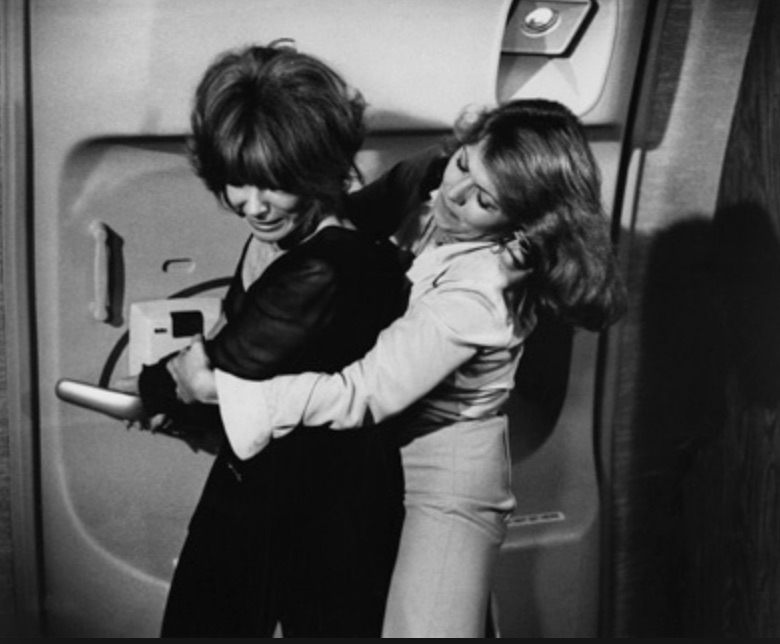
Stabford Deathrage remarks on Lee Grant’s ability to upstage the entire star-studded cast of Airport ’77 (including hubby Sir Christopher Lee) with just a few withering glances


Micro-Brewed Reviews discovered a vintage made-for-TV film called Night Slaves starring Lee Grant and James Franciscus


THE LEE GRANT BLOGROLL - DAY 2 

Silver Screen Suppers whips up a mouthwatering treat based on Grant’s delicious appearance on Columbo: "Ransom for a Dead Man"


Sports Analogies Hidden in Classic Movies proclaims another home run for Lee Grant in the all-star disaster epic Airport ’77


Movie Rob has a few complaints of his own about Lee and company in Portnoy’s Complaint


What the Craggus Saw was the groundbreaking drama In the Heat of the Night featuring Lee Grant in a small but unforgettable role


THE LEE GRANT BLOGROLL - DAY 1

Silver Screenings reveals Lee Grant as a hilariously neurotic mother of the bride opposite Walter Matthau in Neil Simon’s Plaza Suite


Caftan Woman presents Ms. Grant as a high-powered Hollywood columnist in an episode of Ironside: “Eat, Drink and Be Buried”


Sunday, August 19, 2018

Wash This Man Right Outta Your Hair


With a screenplay co-written by Robert Towne (Chinatown) and star/producer Warren Beatty, direction by Hal Ashby (Harold and Maude), production design by Richard Sylbert (Rosemary’s Baby), original music by Paul Simon and featuring a glittering cast of Hollywood acting heavyweights, Shampoo is a satiric sex farce with an impressive cinematic pedigree.

Made in 1975, just months after the Watergate scandal resulted in the resignation of President Richard Nixon—a time of cynicism, escapism and hedonism in America—Shampoo takes place in Los Angeles (chiefly in the neighborhoods of Beverly Hills and West Hollywood) on election night in November 1968, as Nixon is poised to win his first term as President.

Warren Beatty as George

The sexual revolution sparked by the tumultuous 1960s was still going strong in Hollywood well into the 1970s, which makes this film’s 1968/1975 time warp plausible—the specter of AIDS was almost a decade into the future. It was an era where trashy novels like Joyce Haber’s The Users and Judith Krantz’s Scruples delved deeply into the (supposedly) secretly perverse lifestyles of Hollywood’s rich and famous. Shampoo reflects and exploits that mid-70s sexual obsession to satiric and titillating comic effect.

Julie Christie as Jackie


Goldie Hawn as Jill
Reportedly Warren Beatty and screenwriter Robert Towne became BFFs while collaborating on the script for Shampoo, apparently finding they had quite a bit in common. Their rumored kinky sexual predilections included making love to their respective female dates on double beds in the same hotel room, thereby satisfying both their shared voyeuristic and exhibitionistic tendencies. (Later, Beatty and Towne would also share a Best Original Screenplay Oscar nomination for Shampoo.)

Jack Warden as Lester

The film covers a day and night in the complicated life of a free-spirited Beverly Hills hairdresser and Lothario, played of course by Warren Beatty. Warren’s portrayal of the womanizing yet guileless George Roundy is spot on—and why wouldn’t it be?  The subject of Carly Simon’s iconic song “You’re So Vain” (You had one eye in the mirror/as you watched yourself gavotte”), Beatty is cashing in on his own legendary offscreen image as playboy of the western world. Back in the day, the stories of Warren Beatty’s prowess with the ladies was mythic and epic in its proportions, and there were few famous women of the era—from Natalie Wood to Barbra Streisand—who had reportedly not succumbed to his charms.

Far from a cold and calculating Machievellian Casanova, George is a vague, foggy airhead (Beatty is an Aquarius, by the way), a not-very-bright “himbo” who’s a pushover for a pretty woman and seems to fall into his constant sexual conquests almost entirely by default.

Tony Bill as Johnny

Beatty’s George is a peacock, hot stuff indeed as dressed by costume designer Anthea Sylbert.  In his tight blue jeans (often found down around his ankles), white pirate and tuxedo shirts unbuttoned almost to the navel, chunky silver belt and turquoise jewelry, with a few gold chains thrown in for good measure, George is an establishment hippie rebel, riding his motorcycle through the Hollywood Hills with nonchalant cool, brandishing his holstered hairdryer like a gun, his overgrown, tousled “bed hair” blowing in the breeze.

But Beatty imbues his insouciant womanizing protagonist with his own brand of sweet masculine vulnerability, the kind women find irresistible. Inarticulate, unable to describe his feelings or his life with any other word than “great,” George nevertheless has his troubles, experiencing guilt and regret and feeling like a failure in life, not proud of his obsessive promiscuous behavior. “Let’s face it,” George finally admits to Goldie Hawn’s character with weary resignation, “I f*cked them all.”

Carrie Fisher as Lorna

Goldie Hawn, Oscar-winning Best Supporting Actress for 1968’s Cactus Flower, parlays the zany, kooky persona she perfected on TV’s Laugh-In (“Sock it to me!”) into a brilliant tragicomic performance. As Jill, George’s current main squeeze, pretending not to notice that her boyfriend is a notoriously promiscuous cocksman, Goldie is simultaneously hilarious and touching. She scores in scenes that include a hyperventilating panic attack, vain attempts to get a straight answer about George’s whereabouts, and displaying dumb blond naivete as she undergoes a modeling interview with Tony Bill (who later directed the charming My Bodyguard).

Veteran character actor Jack Warden scores in his role as middle aged Beverly Hills businessman Lester Karpf, who keeps a younger woman in a love nest off Mulholland and tortures his hair forward to cover his balding pate. Beatty and Warden have marvelous chemistry in their scenes together in which hairdresser George (with a a few subtly mincing gestures and breathy tone of voice) allows Lester to believe that he’s gay to cover up the fact that he’s sleeping with both Karpf’s wife (Lee Grant) and his mistress (Julie Christie). Warden would cop an Oscar nominee for Best Supporting Actor, and the pair would work together again in Beatty’s next picture Heaven Can Wait.

Lee Grant as Felicia 

Julie Christie is memorable as Jackie, Lester’s mistress and ex-lover of George, a glamorous but tense gal with a drinking problem, still holding the torch for her former boyfriend. The beautiful and versatile Christie, who had achieved iconic superstardom as Lara in Doctor Zhivago and won the 1965 Best Actress Oscar for Darling, was Beatty’s costar in McCabe and Mrs. Miller and had recently been his longtime paramour and domestic partner. (Long before Annette Bening came on the scene, Christie had been the odds-on favorite to get the notoriously marriage-shy Warren to the altar.)

Two years before she shot to stardom as Princess Leia in Star Wars, Carrie Fisher gives a sardonic portrayal of the Karpfs’ nubile teenage daughter Lorna, who taunts George into proving he isn’t homosexual, just to make her mother crazy. In the scene with Beatty, Fisher vehemently protesting “I’m nothing like my mother” has added dimension when you know that Fisher is the daughter of establishment, G-rated movie star Debbie Reynolds. (Lee Grant’s real-life daughter, of course, is the talented Dinah Manoff of Grease and Ordinary People fame. And incidentally, another movie star progeny,  Andrew Stevens—son of Stella—has a bit role with plenty of exposure in the grotto skinny dipping sequence with Jack Warden.)


George and Felicia

Practically stealing the film out from under her very talented costars is Lee Grant as Felicia Karpf, a horny Beverly Hills housewife on the verge of a nervous breakdown. Whether straddling and humping George (to the campy strains of Herb Alpert’s “Tijuana Taxi” on the radio) still wearing her mink coat and curlers in her hair; addressing her maid in ludicrous baby talk (“Mona, Mona, Mona”); or looking daggers and baring her teeth and claws at her husband’s drunken mistress, Lee Grant’s Felicia is a thing of comic beauty, and the quintessential blueprint of the “desperate housewife” archetype.

Grant’s long and storied career, which has spanned seven decades, included the dark period in which the young actress, and many other artists were summarily blacklisted from the Hollywood film industry, branded as un-American subversives in the shameful McCarthy Communist witch hunt of the 1950s. A determined Grant would come back with a vengeance in the 1960s, no longer an ingenue, but now a skilled character actor in dozens of memorable roles, on television (Peyton Place), and in film (Valley of the Dolls, In the Heat of the Night) over the next half century.

The prolific Ms. Grant, who had been nominated for Oscar in 1951 for Detective Story and in 1971 for The Landlord, finally won the Best Supporting Actress Academy Award for her brilliant performance here. She would receive an additional Supporting Actress nod for Voyage of the Damned the next year. In the 1980s, Grant expanded her resumé, becoming an acclaimed documentary filmmaker, garnering praise for directing the groundbreaking transgender documentary What Sex Am I? before winning her second Academy Award for Down and Out in America, while continuing to take occasional acting roles.

George does Jackie


"Let's face it...I f***ked them all."

Shampoo is a delicious romp for its talented ensemble cast, set against the backdrop of 1968 Southern California. The hippie chic, psychedelic Hollywood party sequence is replete with skinny dipping and LSD-spiked punch and a cameo appearance by Michelle Phillips of the Mamas and the Papas, as the newest Beatles album (Sgt. Pepper, of course!) blares in the background. George’s hairdos for both Lee Grant and Julie Christie resemble Barbra Streisand’s 1968 Funny Girl bob— and in the Bistro black tie sequence, Lee Grant even wears a sailor suit, in another Streisand homage from costume designer Sylbert.

Punctuated by mournful Paul Simon music (a few years later, Carrie Fisher would become Mrs. Paul Simon), the soundtrack also includes hits that topped the charts in 1968, including “Wouldn’t It Be Nice” by the Beach Boys and “Sgt.Pepper’s Lonely Hearts Club Band” and “Lucy in the Sky With Diamonds” by the Beatles.

The Criterion Collection has recently added Shampoo to its roster of digitally restored and beautifully presented blu-ray films, so we can enjoy it in all its lush, remastered 4k glory when it is released in October 2018.

For even more on this marvelous movie, visit the fabulous Le Cinema Dreams blog here.

Thanks so much for reading this entry in the Lovely Lee Grant Blogathon, cohosted by my friend Gill at ReelWeegieMidget Reviews. Can’t wait to delve into our sizable blogroll and read everyone’s posts! 


Monday, June 11, 2018

Announcing The Lovely Lee Grant Blogathon
August 20-23, 2018


She’s been one of our most treasured classic movie character actors for more than 60 years—so it’s about time someone did a blogathon for the beautiful and amazing Lee Grant. Join co-hosts Gill of Realweegiemidget Reviews and Chris of Angelman’s Place August 20-23, 2018 to celebrate the illustrious career of the versatile and prolific Academy Award-winning actress.

From comedy to tragedy, soap opera to adventure to grand guignol thriller, Lee Grant has run the gamut in her six decades in show business—her aptly titled memoir I Said Yes To Everything tells the story of a determined actress, mother, activist, director and survivor of the Communist blacklist of the 1950s, who triumphed over adversity by carving out one of the most unique careers in filmdom.

If you have a favorite Lee Grant performance, you’re invited! Up to three bloggers can choose the same Grant film. If you’ve written previously written about one of Ms. Grant’s films, that’s OK too—just send us the link. And grab one of Gill’s lovely banners below, too, if you have mind to, and post it on your blog. Hope you can join us!

Selected filmography (Check IMDB for a complete list)

Detective Story (1951)
Storm Fear (1955)
Middle of the Night (1959)
The Balcony (1963)
Pie in the Sky (1964)
Terror in the City (1964)
Divorce American Style (1967)
In the Heat of the Night (1967)
Valley of the Dolls (1967)
Buona Sera, Mrs. Campbell (1968)
The Big Bounce (1969)
Marooned (1969)
The Landlord (1970)
There Was a Crooked Man (1970)
"Ransom for A Dead Man" (Columbo, 1971)  Reserved by 3 bloggers
The Neon Ceiling (1971)
Plaza Suite (1971)
Portnoy's Complaint (1972) Reserved by 3 bloggers
The Internecine Project (1974)
Shampoo (1975)
Voyage of the Damned (1976)
Airport '77 (1977) Reserved by 3 bloggers
The Spell (1977)
Damien: Omen II (1978)
The Swarm (1978)
The Mafu Cage (1978)
When You Comin' Back, Red Ryder? (1979)
Little Miss Marker (1980)
Charlie Chan and the Curse of the Dragon Queen (1981) Reserved by 3 bloggers
For Ladies Only (1981)
Bare Essence (1982)
Visiting Hours (1982)
Will There Really Be a Morning? (1983)
Teachers (1984)
Defending Your Life (1991)
Citizen Cohn (1992)
It's My Party (1996)
The Substance of Fire (1996)
Dr. T & the Women (2000)
The Amati Girls (2000)
Mulholland Drive (2001)
Going Shopping (2005)

The Lee Grant Blogroll:

Gill from Realweegiemidget Reviews... Voyage of the Damned
Chris from Angelman's Place... Shampoo
Bill at Great Old MoviesThe Spell 
Ken at Le Cinema DreamsPortnoy's Complaint
Quiggy at The Midnite Drive-In Portnoy's Complaint 
Maedez at A Small Press Life… "Ransom for A Dead Man" (Columbo, 1971)
Andrew at The Stop ButtonMiddle of the Night
Debbie at Moon in Gemini... Defending Your Life 
Paul from Return to the 80sTeachers
The Craggus from What the Craggus Saw... In The Heat Of The Night
Dick from The Oak Drive InThe Mafu Cage 
Hakuna Mocata at Synthetic CinemaThe Swarm  
Shroud of Thoughts... Detective Story 
Crystal from In the Good Old Days of Classic HollywoodDivorce American Style
Down Among the Z Movies… "Ransom for A Dead Man" (Columbo, 1971)
Caftan Woman…  "Eat, Drink and Be Buried" (Ironside, 1967)
Movie RobShampoo, Portnoy’s Complaint and Divorce: American Style
Jenny at Silver Screen Suppers… "Ransom for A Dead Man" (Columbo, 1971)
30 Hertz Rumble The Landlord
DubsismAirport ’77 
Paula at Paula’s Cinema ClubTerror in the City
Stabford Deathrage…  Airport ’77
NuwansenfilmsenDetective Story
The Vern at Video VortexMulholland Drive
Movie Movie Blog BlogValley of the Dolls
Rebecca at Taking Up RoomDamien: Omen II
Silver ScreeningsPlaza Suite
The Wonderful World of CinemaAirport ’77
Life Daily Lessons BlogCharlie Chan and the Curse of the Dragon Queen
W.B. Kelso… When You Comin’ Back, Red Ryder
Crítica Retrô…Valley of the Dolls
Words Seem Out of PlaceCharlie Chan and the Curse of the Dragon Queen 
Poppity from Film Exodus... The Big Bounce 
Pop Culture ReverieCharlie Chan and the Curse of the Dragon Queen


Tuesday, April 25, 2017

Oh Damien, You Devil


Horror movies are among my chief cinematic pleasures, and the one that scared me the most as a child was The Omen (1976). I begged my father to take me to see it, and he reluctantly complied, but it scared the bejesus out of me and I was forced to sleep with a night light on for years to come. I would even run out of the room in terror whenever the TV commercial for the film would come on...the frighteningly hollow and cold-blooded tones of the Gregorian chant-inspired theme music by Jerry Goldsmith (the aptly titled opus “Ave Satani”). I was 10 years old.

It wasn’t until the dawn of the Blockbuster Video era in the mid-1980s that I was able to muster up the courage see the 1978 and 1981 sequels to the terrifying original. As a college student at Northwestern University, I also had the opportunity to take a screenwriting seminar taught by a fellow alum—the talented David Seltzer, who wrote the original screenplay that started the Omen phenomenon.

The Antichrist is perhaps filmdom’s greatest arch-villain, bringing about not only murder and mayhem but quite possibly the end of the world itself, and the character of Damien Thorn as portrayed in the Omen trilogy gives viewers a fanciful birds-eye view into the mind and heart of a born killer as he grows from infant to adult.

The three faces of Damien: Stephens, Scott-Thomas and Neill
Obviously inspired by the huge popularity of previous horror classics Rosemary’s Baby and The Exorcist, The Omen enjoyed less critical acclaim but was nevertheless a big box office hit that spawned two entertaining sequels. Seltzer’s original screenplay boasts a strong and compelling narrative and an inventive mythology that provides the blueprint and the backbone for the rest of the series. Punctuated by violent set-pieces and steeped in Catholic and apocalyptic lore, the Omen films chillingly represent the personification of evil in the person of a single character—Damien Thorn.

Born of a jackal and bearing a 666 birthmark—the sign of the Beast as described in the Book of Revelations—Damien does have his share of issues. But he does not have to bear the burden of responsibility alone. He’s surrounded by a bevy of hellbound helpers (played by some of filmdom’s finest character actors) determined to do away with anyone standing in their antihero’s path to ultimate power. One can’t be an effective devil without fearless acolytes, and Satan’s minions are brought to vivid life with wonderful performances in all films. 

Over the course of the three films, each of Damien’s enemies is dispatched in a creatively vivid and violent fashion through a series of gory freak “accidents”—including but not limited to hangings, stabbings, burnings, impalings and dismemberments—that are the hallmarks of the Omen oeuvre.

The Omen (1976): The Littlest Devil
The diminutive Antichrist is portrayed in the original Omen by young Harvey Stephens, but Damien is really just a supporting character in this opening chapter. This first film is headlined by Gregory Peck (Gentlemen’s Agreement, To Kill a Mockingbird) as diplomat Robert Thorn, the Ambassador to Great Britain, and beautiful Lee Remick (Anatomy of a Murder, The Days of Wine and Roses) as his wife Cathy. (The ever-prolific horror movie genre is a saving grace of aging A-list talents who want to keep their names above the title!)

Gregory Peck as Robert Thorn

Lee Remick as Cathy Thorn
As the movie opens, the Thorns’ newborn child has been murdered and replaced with the spawn of the devil, setting the prophecy and plan of the Antichrist’s rise into motion. All is idyllic for the young family until, at Damien’s elaborate fifth birthday party, his nanny (Holly Palance, daughter of Jack) is given the evil eye by a big black Hellhound dog and ends up swinging from a rope in a spectacular suicide sequence. (“Look at me, Damien! It’s all for you!” )

The new governess, Mrs. Baylock, played by the brilliant Billie Whitelaw (Night Watch, Hot Fuzz), is soft-spoken with a gentle brogue and wears sweater sets and sensible shoes. But she turns out to be one tough customer, aided by her fearsome familiar, the ferocious black dog, by her side, to guard her young charge: “Have no fear, little one. I am here to protect thee.” Mary Poppins she is not—a spoonful of hemlock rather than sugar seems to be her preferred prescription.


The marvelous Billie Whitelaw as Mrs. Baylock
Religious imagery and terminology are laid on thickly throughout the film. “Accept Christ, Mr. Thorn,” a crazy old coot of a priest admonishes Gregory Peck. “Drink his blood and eat his flesh.” Later, the seven knives of Megiddo, the sacred implements that are the only weapon that can destroy the Antichrist (and appear as an important plot device in all three films), are given to Thorn by Buchenhagen (Leo McKern).

David Warner (Time After Time, Titanic) is memorable as a photographer whose pictures show premonitions of the violence to come—to others as well as himself, the victim of one of the most gruesome “accidents.”

The devil dog, hound of hell, appears in chapters one and three

At first, it’s not quite clear if Damien, played by the young, cherubic-faced Harvey Stephens, is truly the embodiment of evil, or merely a hyperactive and migraine-inducing spoiled brat. Indeed, he drives his adoptive mother Cathy Thorn, played beautifully by Lee Remick, batty to the point of neurosis.  When the animals at the Windsor Lion Country Safari are terrified of Damien, the giraffes stampeding away and the baboons attacking the car, Cathy muses, “What could be wrong with our child?”

Just follow David Warner's bouncing rubber head in the decapitation scene
Indeed, the obstreperous Damien pitches a hysterical fit when approaching an Episcopal church for a wedding, ripping off poor Lee’s glamorous blue satin turban and socking her in the face; and is truly an annoying presence in the Thorn drawing room, throwing billiard balls and yelling at the top of his lungs. (No wonder Cathy starts seeing a psychiatrist, since spanking the little devil is clearly out of the question.)

But alas, Cathy’s fears are not unfounded. When she gets pregnant, her new baby must be gotten out of the way. While she balances precariously against a top-floor balustrade to fuss with a potted plant, evil Damien mows her down with his tricycle, causing her to fall, break her back and lose her unborn child. (Later, Mrs. Baylock pays her a visit in the hospital to finish the job.)

Young Stephens does give a memorable performance, especially in the climactic scenes with Gregory Peck and Billie Whitelaw, fighting tooth and nail against his adoptive father, who has had quite enough of Damien by now, thank you very much.

Damien: Omen II (1978): The Devil’s Advocates
Now living in Chicago with Robert’s brother, Richard Thorn (William Holden), his wife Ann (Lee Grant) and Richard’s son Mark (Lucas Donat), thirteen-year-old Damien (Jonathan Scott-Thomas) attends a military academy and comes of age—with a little help from his friends.

Top stars like Lee Grant, recent Oscar winner as Best Supporting Actress for Shampoo, and William Holden, who had headlined the acclaimed 1976 Best Picture Network, obviously never declined any paying gig, including this schlocky horror movie (indeed, Miss Grant’s autobiography is entitled I Said Yes To Everything). Actors need to work and earn a paycheck just like the rest of us!

A-listers Lee Grant and Bill Holden—slumming for a paycheck?
 A bloody continuation of the violent acts that must be taken to ensure Damien’s clear path to omnipotence, this chapter focuses upon the many protectors and helpers that surround Damien—conspirators are everywhere to prepare the way for Satan’s kingdom.  At the military academy, platoon leader Lance Henriksen (Aliens, The Terminator) is so enamored with his young hero that he can barely look the boy in the eye. “Our time has come,” remarks businessman Robert Foxworth, who does away with old Lew Ayres to run Bill Holden’s vast conglomerate until Damien comes of age. Lee Grant, the nurturing earth-mother stepmother, plays favorites, turning out to love one of her adopted children just a wee bit more than the other...

Jonathan Scott-Thomas as Damien Thorn
 As for Damien himself, Scott-Thomas portrays him as a well-mannered and well-behaved young man, but does use his “evil eye” to punish a bullying classmate, and later to murder his cousin and best friend Mark in order to claim his birthright. As Damien’s latent talents emerge, he is admonished not to attract attention: “Someday everyone will know who you are.”

In this film, the satanic familiar switches from a black dog to a raven, ostensibly for one of the violent murder scenes to steal boldly from Hitchcock’s The Birds. (For the third film, the black Hellhound canine returns.) Poor Elizabeth Shepherd, resplendent in a fur-trimmed, blood red coat, gets her eyes pecked out by the nasty, angry bird, then stumbles into oncoming traffic. Ouch!

Elizabeth Shepherd and a Hitchcockian feathered friend

Before William Holden can end the madness by destroying Damien with the newly rediscovered knives of Megiddo, Lee Grant literally stops him dead in his tracks with histrionic aplomb, and chapter two ends in an operatic fiery conflagration as the Thorn Museum burns to the ground.

Lee Grant camps it up in the finale: "Daaamieeeeeen!"

The Final Conflict (1981): Devil-May-Care Savoir Faire
This one is all about the eternal appeal of its bad boy antihero. In The Final Conflict, New Zealand actor Sam Neill (A Cry in the Dark, Jurassic Park) makes a handsome and charismatic Damien—but make no mistake, this is one mean and cold-blooded dude. Unlike the soft-spoken and unfailingly polite Damien played by Scott-Taylor in Omen II, Neill’s Damien is as hard as nails.

Sam Neill as the DILF version of Damien—the devil you'd like to....
 As the third film opens, the seven knives of Megiddo are unearthed from the remains of the Thorn Museum fire just as a cosmic alignment is taking place in the heavens, the one that will herald the Second Coming of Christ. Thus Damien, now an adult, must accelerate his plan for world domination by doing away with the Ambassador to Great Britain to obtain his father’s old job (apparently part of the prophecy and a prerequisite for Damien’s rise to political power) and gain a coveted appointment as president of the (obviously Hitleresque) United Nations Youth Council. Indeed, the American Ambassador’s gruesome suicide is the first of several violent set-pieces in the tradition of the other two films.

Damien and his evil brethren then embark upon a crusade to destroy all infants born on March 24th—the date of the Nazarene child’s birth.


Damien and his nemesis

Not quite as broad and campy as Omen II, The Final Conflict does have its share of over-the-top characters and broadly outlandish scenes of gory violence. The knife-wielding monks (including an elegant and thickly-accented Rossano Brazzi) and religious fanatics fight for the good guys, while Damien’s satanic henchmen include a pair of mean-spirited boy scouts, a wild-eyed priest who drowns the baby he is baptizing, and a sinister nurse (with a faint female mustache) wielding a hypodermic.

Neill is effective, even though he does gnaw the scenery in a few places. Damien’s monologue, a prayer to Papa Satan before a grotesque life-size Christ statue hanging backwards on a cross, is memorably florid as he praises “the violent rapture of my Father’s kingdom…” “Oh god of desolation…save us from Jesus Christ and his grubby, mundane creed…” he intones (with a remarkably straight face). 

A large part of this devil’s appeal is as a sex symbol—indeed, Mr. Neill is very easy on the eyes as the grown-up Prince of Darkness. In the film, Damien is having sex with reporter Kate Reynolds—“The Barbara Walters of British journalism” (well played by Neill’s real-life former paramour Lisa Harrow)— and (it’s implied), maybe even with her teenage son Peter (Barnaby Holm), who turns out to be another devil-worshiping acolyte. In bed with Kate making love, Damien roughly flips her over to face the mattress in order to—well, let’s just say the devil’s favorite flavor definitely isn’t vanilla.

"Nazarene, you have won...nothing."

Lovers of the Omen chronicles like me were delighted when 20th Century Fox released digitally remastered versions of these horror classics in a Blu-Ray collection a couple of years ago. The collection includes the trilogy, plus the 2006 remake with Liev Schreiber, Julia Stiles and Mia Farrow in the Billie Whitelaw role. (The less said about that one, the better, though!)

Of the three Damiens, only Mr. Neill still works as an actor. Stephens is now a real estate developer in London, while Brazilian-born Brit Jonathan Scott-Taylor added only a few more film and TV roles to his credit before disappearing from public life in the mid-1980s.

When Shadows and SatinSpeakeasy and Silver Screenings announced this year’s Great Villain Blogathon, Damien Thorn was the first character to pop into my mind. Thanks to them for inspiring me to add the Antichrist to their villainous lineup this year! I look forward to reading all the entries of this stellar annual event!