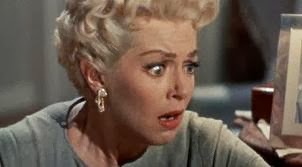
As a pair of iron gates open and we sweep up the drive to a stately East Coast estate, a feverish piano concerto swells and the opening credits announce her name in a stylized cursive typeface: “Lana Turner” in the title role of Madame X (1966). Fans of Miss Turner will know exactly what to expect--they’ll forget their real-life troubles for a while and immerse themselves in melodramatic splendor and manufactured tragedy for the next couple of precious hours. The movie is no masterpiece, but the actress who plays her is, if not a work of art herself, definitely a piece of work. She is the raison d’etre for the picture.

 |
| Lana Turner, Queen of the Weepies |
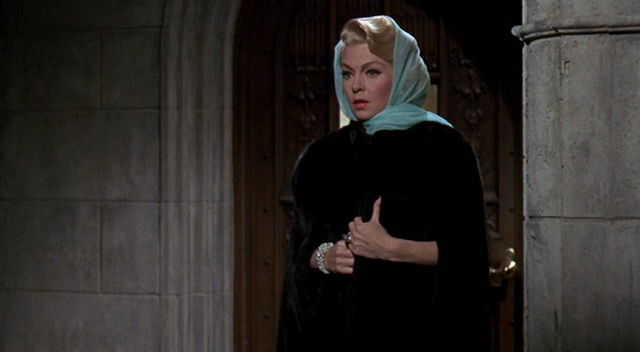
Variations on this hackneyed plot are as old as the hills, but die-hard fans of its star (like me) will pay no mind. In Madame X, Turner’s Holly Anderson, newly married to a rising young politician, makes a shameful mistake that could destroy the reputation of her husband and the future of her young son. She agrees to falsify her own death in order to save them from scandal, sacrificing her identity, her own happiness and ultimately her life in the process. Cue the Kleenex box.
As her appeal as sexy sweater girl and smoldering femme fatale of the 1940s began to wane, a still-glamorous Lana Turner reinvented herself to become the queen of the scandalous soap opera in the late ’50s and early ’60s, extending her shelf life far beyond that of the garden variety sex symbol. The over-the-top melodramas that marked this successful second act in her career, from Peyton Place and Imitation of Life, Portrait in Black to By Love Possessed, cemented her status as a lasting film icon--and even seemed to mirror the dramas in her personal life, most notably the 1958 stabbing of her gangster lover Johnny Stompanato (reportedly by Turner’s daughter Cheryl Crane, but audiences could certainly picture Lana herself wielding that knife). And Madame X is Turner’s swan song as a top-billed, above-the-title star. If only it were a better movie...but does that really matter?

The fault is not Lana’s. Turner gives it all she’s got, and still looks remarkably well-preserved in the early scenes that depict her as a newly affluent young newlywed, bedecked in chic Jean Louis gowns and dripping with diamonds by David Webb. Her descent into alcoholism and despair is appropriately gripping for the film in which she’s appearing...the trouble is, the mannered and surreal “imitation of life” style of storytelling is already years out of date.
 |
| John Forsythe and Keir Dullea |
Released in 1966, the same year as the searing and groundbreaking Who’s Afraid of Virginia Woolf and refreshingly risque comedies like Georgy Girl and Alfie, this sudsy, sexless G-rated confection is already hopelessly dated, even for its time. Filmgoers were now interested in gritty realism, social issues, and sex--savvy 1960s audiences were no longer content to be fed pablum served under a veneer of glamour and artifice.
.jpg) |
| Scene-stealing character actor Burgess Meredith |
The ’30s version of this film with the long-forgotten Gladys George rang truer, as did similar films of this genre that were so popular in that decade, most notably Barbara Stanwyck’s Stella Dallas. The 1966 retelling loses touch with reality in favor of gloss, glitz and over-the-top sentimentalism.
 |
| A G-rated pas de deux with Ricardo Montalban |
Legendary producer Ross Hunter gives Madame X a stylish production. After all, this was the man who gave Doris Day back her sex appeal after a decade of tomboy and matron roles with 1959’s Pillow Talk, and elevated sorrow to tragedy with Turner and Sandra Dee in Imitation of Life--but at its heart the picture, based on an ancient French stage play, is still a hoary old chestnut: a sobber, a weepie, the already-dead movie genre once known as a “woman’s picture.” And without a visionary director at the helm like a Douglas Sirk or even a camp stylist like a Mark Robson, cliched material such as this is bound to fail, even if dressed up with star performances, stylish trappings and an overbearing music score.
 |
| The brilliant Constance Bennett in her final film |
But what makes this film compulsively watchable is Lana Turner herself. This woman is a pro as she propels her audience through the pedestrian script and bravely attempts to enhance the inanities she must utter with meaning. The lady works her ass off to tell the story, and we applaud her courage, we stay with her, because she promises to deliver in the last reel, and so she does. No wonder poor Madame X is so tuckered out by the end of the picture that she simply drops dead. The final scene in which Lana expires in her son’s arms is pure pathos, and probably failed to elicit a single tear among 1966 audiences. We’ve seen this all before, and more artfully executed. But Lana tries valiantly to make it a movie moment worth remembering.
 |
| The unforgettable dialogue... |
 |
| "So you've killed your lover, my girl!" |
The supporting performances are entertaining, essayed by skilled actors with lots of charisma, but with little help from the threadbare script. Burgess Meredith chews the scenery, adding layers of attention-grabbing business to his role as the two-bit hustler. Ricardo Montalban seduces with his smile and Latin charm. Handsome John Forsythe is a bit wooden (he did loosen up a bit decades later on Dynasty), but his inimitable speaking voice (Charlie: “Hello, Angels”) already seems comfortingly familiar. A young Keir Dullea is earnest and attractive, and as the young public defender, displays good chemistry with Miss Turner as the ailing defendant who turns out to be his long-lost mother.
 |
| Properly deglamorized to show the effects of the "toxic liqueur" absinthe |
Practically stealing the film is the legendary Constance Bennett, the classy dame who frolicked with Cary Grant in Topper and countless 1930s films. In this, her last role, Bennett lacerates with studied bitchery as Lana’s still-glamorous but poisonous mother-in-law.
 |
| Madame X is forced to protect her identity |
Unfortunately, this was Miss Turner’s last major motion picture, although she made several appearances in exploitation films, TV movies, guest shots on series like The Love Boat, and played a recurring role on Falcon Crest before her death at the age of 74 in 1995. Her presentational style of acting was passé, based so fundamentally on her movie star image of female glamour, that she simply could not change with the times.
 |
| Get out the Kleenex... |
Contemporaries like Bette Davis, Joan Crawford, Olivia de Havilland and Joan Fontaine found their footing as scream queens in successful horror films. Her MGM colleague Elizabeth Taylor had successfully made the transition to character roles starting with the raucous middle-aged Martha in Virginia Woolf. But beyond their allure and razzle-dazzle, those gals had all proven themselves real actresses. Lana Turner had always been more of a sensation and a personality than an artist. She made more headlines for her personal travails than raves for her performances, though she did receive a Best Actress Oscar nomination for Peyton Place. Stripped of her perfectly coiffed blond hair, red lips, high heels and designer gowns, the icon she’d manufactured would cease to exist. So instead, she clung to her accoutrements of glamour and became a bit of a caricature of herself in later years, and worked less and less.
But in Madame X, Turner commands the screen one last time--and triumphs in her own unique way, while signaling the end of the era of the once-beloved “woman’s picture.”