Monday, May 16, 2016

The Queen of Mean


When a 2016 presidential candidate was recently described as “Lucifer in the flesh,” the first image to flash into my mind was not a politician at all, but rather a slim, elegant and impeccably dressed woman played in a movie by Meryl Streep.

Based upon Lauren Weisberger’s roman a clef novel, inspired by a stint as assistant to none other than Vogue maven Anna Wintour, The Devil Wears Prada (2006) is given a slick and entertaining film treatment by director David Frankel and features fabulous fashions, sumptuous production design and engaging performances by a bevy of attractive and talented actors. But the film really belongs to just one person, in the eponymous title role.

Meryl Streep as the Devil incarnate

The character of Runway editrix Miranda Priestly joins the ranks of cinema’s greatest female bosses from hell including Joan Crawford’s Amanda Farrow in The Best of Everything, Susan Hayward’s Helen Lawson in Valley of the Dolls, and Sigourney Weaver’s Katharine Parker in Working Girl. Miranda is brought to terrifying life with brilliant precision by the most multifaceted actress of all, Meryl Streep, who earned a richly deserved Academy Award nomination for the role. (If only she had won that third Oscar for this juicy part, and not as a bucktoothed and boring Margaret Thatcher!)

Miranda Priestly is everything an iconic screen villain should be—an irresistible combination of beauty, brains and cruelty. She’s narcissistic and self-centered; talented and driven; ruthless and cold-blooded;  in short, a glamorous embodiment of pure and unadulterated evil. 

Miranda Priestly, editor of Runway magazine

Streep takes great pains to fashion a completely original character in Miranda, who looks and sounds nothing at all like Anna Wintour. Instead, Streep cleverly makes her antiheroine a soft-spoken dragon lady; her vicious putdowns and catty remarks are all uttered sotto voce, with ladylike deportment. But her murmured asides are skillfully designed for systematically belittling, criticizing and dismissing her long-suffering staff, who exist only to please her. But the mere pursing of her lips in displeasure is “a catastrophe.” Her opinion is the only one that matters.

Anne Hathaway as Andrea Sachs

Giving an endlessly long string of orders to her assistants in a hushed monotone, demolishing deadlines and rescheduling meetings, the Queen Bee then sighs with weary disappointment when her worker bees and drones fail to fulfill her commands quickly or efficiently enough. “It’s baffling to me, confusing to me“ she sighs in quiet exasperation, “Why is no one ready?”

Stylish, poised and supremely self-possessed, and fortified by a healthy case of borderline personality disorder, Miranda cuts a swath of pure terror through the Runway offices. Her few redeeming qualities — talent, a singular focus and a steely determination to survive in the shark-infested waters of the New York fashion pool—do little to offset her hard-as-nails persona.

Here she comes: "Gird your loins"
Described by other characters as “a notorious sadist” who is “not happy unless everyone around her is panicked, nauseous or suicidal,” Miranda is as iconic as Cruella deVil and Mommie Dearest, minus the cartoon campiness. Streep imbues the character with disturbing reality.

Perfectly playing Snow White to Streep’s glamorous Wicked Queen is Anne Hathaway in one of her most winning roles. As fresh-faced Northwestern graduate Andrea Sachs, who reluctantly takes the job of second assistant to Miranda, Hathaway arrives fully prepared to pay her dues, but doesn’t yet realize she’ll be paying in tears, toil and blood. (And by changing every aspect of her appearance to measure up to the fashion industry’s impossibly high standards. Hard to believe that the willowy Hathaway is shamed for eating and described as “fat” by her new coworkers.)

Andrea and Emily (Emily Blunt)

Nigel (Stanley Tucci) and Miranda

The ice queen puts her new assistant through her paces, treating her like dirt when she acknowledges her presence at all, damning her with the faintest of praise. Like a starving animal, Andrea eagerly laps up the few crumbs of approval that are offered by her new employer. Then, in true Faustian fairy tale fashion, Andrea becomes the girl Miranda wants her to be, ditching her friends, lover and personal integrity in the process.

Though Andrea enjoys a personal happy ending, walking out on Miranda and getting her dream job as a newspaper reporter, the villain is far from vanquished at the close of this story. Ultimately, it is her power that allows Andrea to get her next job; ironically confirming that Miranda’s influence will probably continue, undiminished, perhaps indefinitely. Evil triumphs!

Nate (Adrian Grenier) and Andy
Simon Baker as Christian

Though Streep and Hathaway dominate here, they’re bolstered by an impressive cast and production that make the film an utter delight to watch again and again. Brilliant supporting performances by Emily Blunt as a bitchy Miranda mini-me and Stanley Tucci as a twitchy gay fashion director (sharp-tongued but with a heart of gold, of course!) are perfect foils for Miranda and Andrea. Adrian Grenier and Simon Baker add some tempting male eye candy to the proceedings. Costume designer Patricia Field (Sex and the City) captures the fashion zeitgeist of that moment, and the soundtrack and cinematography capture the mood and magic of the New York and Paris fashion worlds.

Though Meryl Streep has aced practically every kind of role imaginable, like most actors she really seems to relish this rare opportunity to play an out-and-out evil bitch. And a decade later, it remains one of her most memorable roles. 


Thanks to Speakeasy, Silver Screenings and Shadows and Satin for hosting The Great Villain Blogathon of 2016. So much fun to participate!

Monday, March 21, 2016

Elvis Kicks the Movie Habit


Have you seen the one where Mary Tyler Moore plays a nun opposite Elvis Presley as a doctor? More of a curiosity than a movie classic, Change of Habit (1969) has some surprisingly entertaining moments, and marked a turning point for both its iconic stars.

By the time he made Change of Habit, Elvis Presley had starred in 30 films, the lion’s share of them puerile, formulaic vehicles designed to exploit his manufactured rock star image for commercial gain. Ironically, his film career had basically killed his record sales, as most of the music in Elvis’s films was studio-manufactured pablum that he could barely stand performing. (To me, Elvis on screen is like the male Doris Day...trapped by a stereotypical image and one-dimensional, cookie-cutter film roles, his talent and versatility rarely fully realized.)


Elvis Presley as John Carpenter
At the beginning of his film career, Elvis had longed to be taken seriously as an actor. Indeed, in his 1956 movie debut in the sentimental western Love Me Tender, he had been compared to James Dean. Strong performances in the early films including Loving You, Jailhouse Rock and the Clifford Odets drama Wild in the Country gave way to a decade of mindless Technicolor fluff. Though there were some momentary flashes of fun and brilliance in films like Blue Hawaii and Viva Las Vegas, Presley’s dramatic promise was never fulfilled.

By the late ’60s, Elvis was disenchanted with both his film contract at MGM and his music, both controlled by his longtime manager Colonel Tom Parker, and he had already begun to put his foot down and change the trajectory of his own career. Most recently, Elvis had taken hold of the artistic reins of a Christmas TV special he had been signed to do, and transformed it from a traditional holiday concert into his groundbreaking rock ‘n roll comeback special, performing before a live audience for the first time in years.


The doctor is in!
Change of Habit would offer a similar change of pace for Elvis’s movie image, though it’s still undoubtedly a star vehicle. For a light, G-rated comedy, the movie would touch on some sensitive and timely subject matter including poverty, heroin addiction, autism and rape, with some fairly frank dialogue and situations as well (a young girl is described as a “bitch,” and the well-dressed nuns out of their habits are mistaken for high-priced hookers.)

Elvis plays Dr. John Carpenter, an inner city doctor at a free clinic in a rough neighborhood who welcomes the help of three young nurses, who unbeknownst to him, are Catholic nuns. Of course, Elvis’s doctor also strums a guitar and sings, and our first glimpse of him is surrounded by young people grooving to his edgy rendition of “Rubberneckin.’” (Though he had to continue in a musical vein to bolster the film’s commercial viability, Elvis made sure that at least a couple of songs in the film were hip and up to date.)

Mary Tyler Moore as Michelle

In his last film role, Presley acquits himself nicely, bringing heart and charm to his role of inner city physician, displaying a real chemistry with his female costar as well as with the neighborhood kids he treats at the clinic. The Elvis charisma and iconography are still apparent, though, and the Christ-like symbolism surrounding him is hard to miss as the aptly named “Carpenter” is photographed under a stained glass window (and a bright Hollywood halo around him!) while performing a rousing rendition of “Let Us Pray” to a packed church crowd during the rock ‘n roll mass finale.

As he now turned to rekindling his passion for live performance, Elvis would never act again, although he appeared as himself in two MGM-released documentary concert films, Elvis: That’s the Way It Is and Elvis on Tour, and seriously considered but ultimately turned down producer Barbra Streisand’s offer to play the fading, drug-addicted rock star in the 1976 remake of A Star Is Born (a role perhaps too close to home).

Sinful thoughts, perhaps?
Change of Habit also marked a transition period for Mary Tyler Moore. After years as America’s TV sweetheart playing the adorable Laura Petrie on The Dick Van Dyke Show, Moore was having trouble finding a new niche. After the cancellation of Dick Van Dyke, Mary had experienced her first resounding flop on Broadway in an ill-fated musical adaptation of Breakfast at Tiffany’s opposite TV’s Dr. Kildare himself, Richard Chamberlain, and played a supporting role in the movie musical Thoroughly Modern Millie starring Julie Andrews. Change of Habit would be Moore’s last theatrical film for many years, just before finding her sweet spot back in the world of television.

Mary Tyler Moore revealed she was not exactly thrilled at the prospect of being the female lead in an Elvis movie, but her costar’s unfailing politeness, humility and work ethic helped make it a positive experience. She found Presley easy to work with, charming, sensitive and considerate, and admitted she had underestimated his acting ability.


Barbara McNair and Jane Elliot
Edward Asner
As Sister Michelle, who has a crisis of faith when she falls in love with the charismatic Dr. John Carpenter, Mary gives a solid performance, and she’s photographed beautifully. But it would be in her next big screen movie 11 years later in which she would enjoy her greatest cinema triumph, for the role that would earn her an Academy Award nomination in Robert Redford’s Ordinary People.

Though Change of Habit is made enjoyable largely by the chemistry and star power of Elvis and Mary Tyler Moore, the leads are ably supported by a likeable and talented cast including stunning actress/singer Barbara McNair (who unfortunately doesn’t get to sing a note here) and Jane Elliot (someday to become a long-running soap opera villainness) as Sister Michelle’s cohorts. Ed Asner (soon to team up with you-know-who in a new sitcom) is perfect in his small role as a wise and kind police officer.

Between Change of Habit and Ordinary People, of course, Mary Tyler Moore would turn the world on with her smile and the brilliantly written and acted ensemble TV series that bore her name. But remember, she turned Elvis on first, and was his final—and a quite formidable—costar.


Friday, February 26, 2016

The Best Actress of 1958—Auntie Roz


It’s absolutely incredible to me that so many of our greatest film stars never won an Oscar...Barbara Stanwyck, Cary Grant, Natalie Wood, Marlene Dietrich and Richard Burton come to mind. Rosalind Russell was nominated four times, and really should have won for Auntie Mame (1958).

In my opinion, Rosalind Russell’s iconic, bravura performance in the film adaptation of her Broadway triumph was the best performance by an actress in 1958 and should have copped her the golden statuette she had always so badly wanted to win. Though her competition that year included Elizabeth Taylor (as Maggie the Cat), Deborah Kerr, Shirley MacLaine and the winning turn by Susan Hayward (as convicted murderess Barbara Graham in I Want to Live!), the Oscar should have gone to Roz.

(Not that I don’t worship Miss Hayward; I do, but my favorite performance of hers was three years earlier, as alcoholic songstress Lillian Roth in I’ll Cry Tomorrow. But that’s another story...)

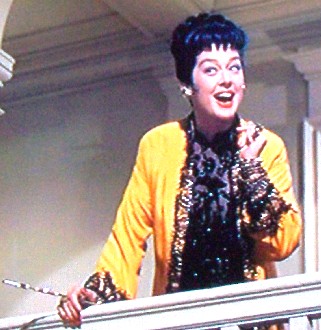
The many faces of Roz as Mame Dennis

By the time she received this Oscar nomination as Best Actress of 1958, Rosalind Russell was a mature and established actress who had paid her dues and survived a roller coaster of personal and show business ups and downs. Auntie Mame was the culmination of a life’s work and the apex and high point of her film career.

Though she would headline some high-profile movie projects throughout the next decade, most notably as Mama Rose in the musical Gypsy and as the Mother Superior in the comedy The Trouble with Angels and its sequel, Russell would never again experience the heights of critical acclaim and commercial success she had enjoyed with Auntie Mame. This would be her final Oscar nomination.

She had started in Hollywood as a supporting actor, albeit a glamorous one, under contract to MGM in the early 1930s, where she was usually cast as a humorless, wealthy British heiress who would lose her fiancé (William Powell or Clark Gable) to a more charismatic or street-smart leading lady (Katharine Hepburn or Jean Harlow). That she was so often cast as a Brit was a tribute to her acting ability, as she had been born in Waterbury, Connecticut!

"Are we all lit?" Roz ignites Fred Clark's Flaming Mame

Russell worked hard, progressing to dramatic leading lady roles, which she found equally dull to play, so she segued into comedy character parts, triumphing in the supporting role of the gum-chewing gossip Sylvia Fowler in The Women (1939) and then opposite Cary Grant in the classic screwball comedy His Girl Friday (1940).

It was through Grant that she would meet her husband, producer Frederick Brisson. In show business circles, Brisson was snidely referred to as The Lizard of Roz for his ruthless devotion to his wife’s career, buying up the rights to books and Broadway plays out from under other stars to commandeer their roles for herself. (Ethel Merman may well have coined the nickname for Brisson!)

Russell had come so close to winning the Oscar before. She had been nominated as Best Actress in 1942 for My Sister Eileen (losing to Greer Garson in the sentimental wartime favorite Mrs. Miniver) and in 1946 playing the real-life heroic nursing nun Sister Kenny (losing to Olivia deHavilland, finally winning her first statuette for To Each His Own).

But in 1947, Russell was the odds-on favorite to win for her performance in Eugene O’Neill’s heavily dramatic Mourning Becomes Electra. It was her turn...or so everyone thought, including Russell. Legend has it that the night of the ceremonies, our Miss Roz rose from her seat as the envelope was opened and the winner’s name read. Still standing, poor Roz was mortified to realize that it was Loretta Young’s name that had been called, for the light comedy The Farmer’s Daughter. Literally thinking on her feet, Russell gamely started a standing ovation for winner Young.

A toast to the original and best Mame
 Auntie Mame was her final acting nomination, though in 1973 she was awarded the prestigious Jean Hersholt Humanitarian Award, presented by her friend Frank Sinatra, for her tireless charity work. (Other recipients have included Elizabeth Taylor, George Clooney, Angelina Jolie and Debbie Reynolds.)

Mame Dennis is Rosalind Russell’s greatest and most enduring screen role, richly deserving of the Academy Award. Russell’s Mame has everything—humor, wit and hilarity; vulnerability, heart and emotion. It’s the story of a high-living Manhattan party girl whose life is transformed by love when her orphaned nephew comes to live with her, becoming the center of her universe. Through a series of comic (and tragic) misadventures, Mame imparts to Patrick her credo and philosophy: “Life is a banquet, and most poor suckers are starving to death.”

Mame’s first appearance is perhaps the greatest entrance in film history as she descends down a grand winding staircase at the height of a raucous cocktail party, trotting down the stairs at breakneck pace talking a mile a minute. All bets are off—you know you are in for one hell of a ride with this saucy dame!

"Help is on the way, darlings!"
Russell is the epitome of mature glamour in the ostentatious Orry-Kelly gowns that underline the flamboyancy of her character, but it’s her sheer charisma that carries this film. She is at turns wise, noble and loving, at other times as loco as Lucy Ricardo, but always every inch the grand lady. Roz commands the screen with her tour de force performance, creating a character that has become a lasting archetype in popular culture--everyone, it seems, has a delightfully off-kilter black sheep like Auntie Mame in their family.

In Auntie Mame, Russell is ably supported by a large cast of zany and lovable character actors, including Coral Browne as a drunken stage star, Forrest Tucker as a southern sugar daddy, Fred Clark doing a slow burn as Patrick’s conservative bank trustee, and best of all, Peggy Cass recreating her stage role as the shy and retiring secretary Agnes Gooch, who gets more than she bargained for when inspired by Mame’s memoir Live, Live, Live. (Miss Cass also earned a Best Supporting Actress Oscar nomination for her own iconic performance.)


Russell to Jan Handzlick as Patrick: "Your Auntie Mame is hung..."

As Mame’s nephew Patrick, Jan Handzlik (who also played the role on Broadway) enjoys great chemistry with Russell and allows her to show a softer, more vulnerable and maternal side to the character. (In real life, Russell was a famously doting and loving mother to her only son, Lance.) The grown-up Patrick is played by the very handsome Roger Smith, soon to become a TV heartthrob on 77 Sunset Strip before devoting himself full-time to managing his wife Ann-Margret’s career.


Coral Browne as Vera Charles

Peggy Cass as Agnes Gooch

Auntie Mame marked something of a film comeback for Russell, who had reinvented herself as a stage star when her movie career began to flag in the early 1950s, triumphing in the 1953 Comden and Green/Leonard Bernstein musical Wonderful Town (based on her 1942 film My Sister Eileen), quite a feat since she had never sung or danced before.


Roz originated the role in the play based on the book

Brisson and Russell then acquired the rights to the best-selling memoir Auntie Mame by Patrick Dennis, which was developed into the hit play on which the film was based. Later, the story was adapted into the 1966 Jerry Herman musical Mame, which starred Angela Lansbury, and the 1974 musical film Mame with Lucille Ball. Russell claimed in her memoir that she had been offered the role of Mame in both the Broadway musical and the film version, but turned them down, probably wisely. (Roz’s atonal singing in the film version of Gypsy had been universally panned by critics.)


Roger Smith as Patrick Dennis

Rosalind Russell died in 1976 after a long battle with breast cancer and rheumatoid arthritis. She had undergone a double mastectomy as early as 1959, and kept her condition a secret from everyone except her costume designers. But later on she became one of the first stars to discuss her cancer publicly, in the hopes that she could help others struggling with the disease.

Though the Academy gives its Oscars ostensibly for the single outstanding performance that wins the prize, it often also awards performers for a final crowning achievement, as a thank-you for a long and brilliant career. Rosalind Russell’s Auntie Mame is worthy of that golden statue on both counts.

Russell accepts her Jean Hersholt Humanitarian Award from Frank Sinatra in 1973
 
Thanks to my friend Quiggy at his wonderful Midnite Drive-In blog for sponsoring the Oscar Snubs Blogathon with Silver Scenes!  It's such an honor to participate!

Friday, February 12, 2016

There's No Girls Like Showgirls


Showgirls (1995) is one of the most flamboyantly fabulous failures in film history, which makes it a must-watch for any self-respecting cinema voyeur. If you’ve seen it more than once, chances are you’ll want to see it again and again. It’s so, so ill-conceived and tasteless, you can’t possibly look away.  

Stylistically, the film is a throwback to the schlock cinema of a bygone era, owing its look and feel to the colorfully prurient, unreal cinema worlds created in showbiz-themed films of the late 1960s like Valley of the Dolls (and of course the Russ Meyers “sequel” Beyond the Valley of the Dolls) and Myra Breckinridge. With its extravagantly over-the-top costumes and production design, artfully painted kewpie-doll-faced actresses sporting skimpy attire (when they are lucky enough to be wearing anything at all other than fairy dust and sequins), nothing whatsoever resembles physical reality in any way, shape or form. It’s 100% melodramatic soap opera fantasy, glossed over with a heavy hand. 

The fire and magic of Nomi Malone (Elizabeth Berkley)

The plot is pure All About Eve, with a smidgeon of 42nd Street thrown in for good measure, though I don’t recall if Ruby Keeler ever pushed Bebe Daniels down the stairs. Beat by beat, you’ll recognize the well-worn tropes from countless other show business films—the ambitious young acolyte, the insecure star, the producer who’s really a pimp, the frustrated director and choreographer, etc.

I feel like I should hate this film, because it has one of the most nakedly misogynistic points of view I’ve ever seen in a Hollywood narrative. The nudity is not what bothers me; the perpetually bouncing breasts (which inexplicably bring to mind the topless dancing zombies of Ed Wood’s Orgy of the Dead) and female objectification are adolescent and gratuitous but not particularly offensive. It’s the way the characters are drawn and the way they go about achieving their goals that I take issue with—practically every woman in this film is an out-and-out, high-riding bitch and walking paragon of vulgarity. Worse, the only sympathetic character in the script is mercilessly beaten and raped for no apparent reason. 


Every man's fantasy

Most chillingly of all, this putrid attitude toward women is revealed in the so-called jokes of the squat, overweight and unlovely mistress of ceremonies at the sleazy Cheetah nightclub: “What do you call that useless piece of skin around a tw*t?” she asks the audience. “A woman!” When the pouting lips, curvaceous breasts and pert bottoms are stripped away, is that what men think of the opposite sex when all is said and done? 


The intense vulgarity of Mama Bazoom (Lin Tucci)

This film is demeaning to women, so why do I enjoy it so much? (I think I know.)

I believe I understand exactly why this film has been elevated to cult status by a primarily gay male audience. Showgirls must not be read literally as the adventures of a group of women in the Las Vegas entertainment industry. Because the characters are NOT WOMEN. If, in your mind’s eye, you imaginatively cast every female character as a drag queen, it all starts to make more sense. Every actress who has the misfortune to appear in this film is a female impersonator. 

Is Nomi Malone a man in drag?

In various reviews, critiques and critical essays on this picture (and there have been surprisingly many, for such a piece of glittering trash), the female characters of Showgirls have been described as automatons, mannequins, robots and blow-up dolls. True, not one of these voluptuaries can be described as a flesh-and-blood woman. But if you have ever spent any time in the milieu of female illusionists, drag shows or transexual cabaret (in West Hollywood, San Francisco, Fort Lauderdale or Key West, or perhaps even in today’s Las Vegas), you will recognize the cynical, cruel and hard-nosed archetypes of this gritty netherworld of show business. Though played by attractive and talented women, the brittle characters of Nomi Malone, Cristal Connors and friends are obviously gay men in drag. (And them guys are MEAN, take my word for it, honey! You don’t believe me? Watch RuPaul’s Drag Race!)

But you really can’t fault the principal performers, who actually do better than expected in entertaining the viewer and elevating the proceedings above swamp level. Each actor in this opus gives it their all. From Kyle McLachlan (who bares his well-rounded buttocks again for the love of thespus) to Alan Rachins, Robert Davi and Lin Tucci (as the aforementioned Cheetah emcee Mama Bazoom), the cast is uniformly strong and makes the movie eminently watchable. 

Alan Rachins as Tony Moss: "I'm erect. Why aren't you erect?"
Much has been written unfairly denigrating Elizabeth Berkley’s performance as Nomi Malone, the twitchy, bitchy and often psychotic heroine. Propelled by a naked ambition to become a star (despite her comically inept and awkward dancing) and fuelled by double cheeseburgers and milkshakes (when everyone knows that real dancers eat brown rice and vegetables!), Berkley’s Nomi is as dumb as a rock yet cunning as a fox. Nomi is mean; Nomi is a jerk. Nomi dumps on everyone as punishment for being dumped on. It’s an impossible role to play, under-written and shallow, but somehow Berkley makes it memorable with raw energy, courage and chutzpah. Frankly, she nails it. It’s far from an Oscar performance, but she deserves a medal for her valiant attempt. 


Gina Gershon as Cristal Connors, Las Vegas super-villainess

Taking her place in cinema history alongside Margo Channing and Helen Lawson is Cristal Connors, played with a garish flourish by the versatile Gina Gershon. Cristal’s an aging star (she’s pushing 30, after all!) and predatory lesbian, another drag-queen character played by a woman, but an exceedingly talented one. Gershon’s timing and delivery are right on the money; her scenes with Berkley crackle with excitement and palpable suspense. The two leading ladies display real chemistry in their catty face-offs.

Zack (Kyle MacLachlan) and Nomi make the motion of the ocean


Thematically, the film panders to the lowest common denominator of the average poor zhlub’s hopes, dreams and fantasies of success: The good life is all about sex and money, drugs and champagne, gambling and winning and fame and fortune. It’s a small and petty world of dog-eat-dog, a place where the opportunists find, use and abuse each other. It’s a glorification of our basest instincts, tarted up with lipstick and sequins and bare skin but ultimately, ugly and pathetic.

Speaking of base instincts, the creative team behind the stylish ’90s noir classic Basic Instinct is to blame for serving up this misogynistic stew of bare breasts and show business clichĂ©s. Director Paul Verhoeven (Starship Troopers, Black Book) and screenwriter Joe Eszterhas (Fatal Attraction), both skilled masters of storytelling, took a wrong turn here that seemingly reveals arrested adolescent yearnings and an obvious frustration with and total incomprehension of the opposite sex. They prove themselves here completely unable to relate the story of a woman, so instead they rely on cartoonlike stereotypes of what unenlightened men must think women are, or should be, or might be, like. (And that’s exactly what female impersonators do.)  

What women must do when men aren't around
To be fair, the male characters fare no better in this dark comedy—so there’s equal opportunity dehumanization. If the women are all whores and bitches, the men are all horndogs and scumbags. The entire showbiz milieu that Verhoeven and Eszterhas present here says a lot less about Vegas than it does about their own ambivalent feelings toward the film industry and their own livelihoods. Showgirls sheds light on Hollywood’s own hardened and cynical attitude toward the ever-loving “business of show,” treating all its talent like prostitutes and requiring the most Machiavellian of methods to claw yourself to the top of the heap.

But, in spite of itself,  Showgirls is far from devoid of entertainment value, hence my love-hate relationship with this movie. Beneath the Valley of the Barbie Dolls and Playboy Centerfolds come to life, the hypersexual situations, the incessant bumping and grinding, is a rollicking good dark comedy about mean and nasty people doing evil and loathsome things. And furthermore, what red-blooded American moviegoer doesn’t love a movie chock full of bare-naked actors, feathers, spangles, pole-dancing, switchblades and a few well-placed karate kicks to keep the action rolling along? Showgirls is a splashy, flashy, trashy exposĂ© of the show business urban legend. (And they don’t call it “show” business for nothing—they really do show it all, hence the NC-17 rating.)

Does it look like they're levitating to you?

In other words, it’s so bad, it’s great. Unforgettable dialogue highlights: “Well, you f*cked the meter reader!”/“Life sucks? Sh*t happens? Where do you get that stuff, off of t-shirts?”/ “I used to like Doggy Chow, too.” (Eszterhas commanded an unprecedented $4 million for this script—don’t you wish you knew how to write a screenplay, too?)

I guarantee, if you’re still watching this after 20 minutes or so, you’ll be hooked. And it ain’t over till “Caesar sings” (off key of course). And if you’re a repetition queen like me, one day you’ll actually be watching it for the 300th time...

If you need even more Showgirls, check out two of my favorite bloggers' takes on this cult classic: Le Cinema Dreams and Great Old Movies.

Friday, February 05, 2016

Lost Perspective


While making Lost Horizon (1973), the creators of this gargantuan, ignominious flop certainly lost sight of the horizon of entertainment and good taste. What were they thinking? Is this disastrous epic the result of Hollywood neglect and excess—too much LSD, loco weed and California fruit salad—or was this film the accurate fulfillment of their artistic aspirations? Did anyone involved think it was going to actually be good? Or does Hollywood sometimes play perverse and expensive jokes on its unsuspecting public? The mind boggles.

Given a glossy and overblown treatment from producer Ross Hunter (Midnight Lace, Airport), this is a film that is so cheerfully, gleefully and appallingly bad that’s it’s difficult to stop watching. You can’t wait to see what atrocity is coming next. No wonder that more than 40 years after its release, it remains a staple on film critics’ lists of the worst films of all time. 

Ullmann, Kennedy, Van, Kellerman, Shigeta and Finch—all equally thrilled to appear in this very special movie

By the early 1970s, the musical film was already well past its death throes, with overbudgeted spectacles like Star!, Hello, Dolly and Dr. Doolittle nearly bankrupting the big studios over the past several years, but the lesson—no more big musicals!— had yet to be learned. (Indeed, the very next year, Hollywood would give us Lucille Ball as Mame!).

Based on the James Hilton novel and the classic 1937 Frank Capra film, this 1973 reworking follows the general narrative of its source materials but attempts to give it a contemporary anti-Vietnam War take, as the characters flee from a war-torn Asian country before their plane crashes in the snowy Himalayas and they are rescued and led to Shangri-La, a remote and magically temperate paradise sheltered by mountains on all sides. 

The legendary Larry Kramer, author of The Normal Heart—and more importantly, Lost Horizon

With a screenplay penned by the brilliant writer and gay activist Larry Kramer (The Normal Heart), you might think that the story and characters would reveal some depth, wisdom or profundity through the writer’s lens, but no such luck. Kramer himself admits he took the job to make a quick buck--and ironically the biggest payday of his career.

It’s also a criminal misuse of a group of very talented actors, many of whom defined cutting-edge 1970s cinema, such as Ingmar Bergman muse Liv Ullmann (Persona, Smiles of a Summer Night), Peter Finch (Network) and Sally Kellerman (MASH). Michael York (The Three Musketeers, Logan’s Run),George Kennedy (Airport), Olivia Hussey (Romeo and Juliet) and Bobby Van round out the leading cast, but Kramer’s flat script gives them all precious little of interest to do. 

Kennedy, Van, Kellerman, Ullmann and Finch take in the splendors of Shangri-La

York is easy on the eyes but plays a petulant and annoying character, the journalist brother of Peter Finch who is impatient to leave and get back to the real world. (To him, war and genocide and disease are preferable to the gongs, wind chimes, incense and flowing caftans of Utopia.) Finch tries halfheartedly to essay the role of the philosophical older brother who falls for lovely Liv. Kellerman overacts embarrassingly as a suicidal newswoman hooked on pills and alcohol. Olivia Hussey is little more than window dressing, her pretty face and figure blending into the scenery.

Paradise will be less attractive when Michael York and Olivia Hussey leave it

The supporting characters fare slightly better. Sir John Gielgud’s deadpan turn as the inscrutable Tibetan monk Chang is priceless—now there was a man who could play it straight no matter how outrageous the material he was given (Gielgud’s best moment on film was to come several years later, as the butler with the martini-dry wit in Arthur.) Charles Boyer also has a twinkle in his eye as he plays the mystical and mysterious High Lama. The handsome James Shigeta is elegant and classy and wisely underplays as the servant To Len. (Too bad that his best featured role comes in this all-time turkey.)

Charles Boyer as the mysterious High Lama

Sir John Gielgud as the inscrutable Chang

But, of course, what makes this film a camp classic is the fact that it’s a musical. Except for song-and-dance man Bobby Van, all the principals’ vocals are dubbed (or “augmented”), and by an unbelievably tone-deaf set of ghost-singers. Poor Liv Ullman’s screeching “The World is a Circle” is most dissonant of all—with that overblown budget, couldn’t they afford to engage the services of a Marni Nixon? And the Swedish actress is called upon to dance—or at least move rhythmically—as well. So are the unfortunate Sally Kellerman and Olivia Hussey. All these lovely ladies are horrifyingly graceless.

Sorry, Liv Ullmann, but we already have a Julie Andrews

An innovative table dance for Olivia Hussey and Sally Kellerman

To add insult to injury, the songs are even worse than the performers, despite their impressive musical pedigree. Lost Horizon marked the swan song of the iconic songwriting team of Burt Bacharach and Hal David, whose catchy tunes and ballads helped define 1960s pop culture and launched the careers of Dionne Warwick, Cilla Black and later The Carpenters. But by 1973 Bacharach and David were apparently feuding and accepted this movie gig just as they decided to break up. 

Burt Bacharach sang a few of his Lost Horizon "hits" on his own album

The result of their final collaboration is a motley collection of songs so insipid and unmemorable that it’s astounding they were written by the authors of such standards as  “The Look of Love,” “I Say a Little Prayer” and “Close to You.” Such a shame, since they had successfully scored the hit play Promises, Promises on Broadway several years before and should have been well versed in the art of dramatic musical storytelling. Most of the songs are flat and unmusical, and even the lilting refrains of “Share the joy” and “Shangri-La” repeated throughout the film are derivative and muddled, sounding suspiciously similar to Richard Rodgers’ “Bali H’Ai,” with a soupçon of the Fantasy Island theme song thrown in for good measure. 


Ah, the spectacle—thank you, Mr. Hermes Pan!

Shame, too, on Hermes Pan, the genius choreographer who helped Fred Astaire shape most of his iconic musical numbers at RKO and MGM. The awkward Bali dancing and inept pageantry Pan presents here in the "Living Together, Growing Together" number are colorfully amiss, though at least there is plenty of tanned beefcake on display. (Pan had had much more success choreographing the spectacular entrance of Elizabeth Taylor’s queen of the Nile into Rome for Cleopatra ten years earlier. What happened?)

"Question me an answer, bright and clear..." The adorable Bobby Van

The only artist who emerges from this debacle musically unscathed is Bobby Van, who offers a vibrant and spirited performance as a down-on-his-luck standup comic who gains a new lease on life as a schoolteacher in paradise. The only cast member with any musical chops whatsoever, Van steals the picture (not a difficult feat) with his charming and winning “Question Me an Answer” routine performed with a bevy of adorable Asian schoolchildren. (It’s also one of the least egregious of the Bacharach/David tunes.) True, he is no Astaire or Kelly (or even Donald O’Connor), but next to his musically challenged castmates, Van looks like the hardest working man in show business.

A chorus boy (and later choreographer) under contract to MGM in the late forties and fifties, who most notably danced with Ann Miller and Bob Fosse in Kiss Me Kate, Van was married to TV actress Elaine Joyce (who is now the wife of Neil Simon) with whom he appeared on numerous 1970s game shows (remember Tattletales?). Van died young, at age 54, in 1980, and Lost Horizon was his largest big-screen role. But even Bobby cannot save this hopeless turkey.

There is too much more ineptitude to point out every jarring note of this big, bold flopperoo, but a few more highlights include the jaw-droppingly bad makeup job of Olivia Hussey when she withers with age away from Shangri-La. It’s an unforgettable movie moment of unintentional hilarity, as is Michael York’s over-the-top scream of horror at her appearance, which drives him to take a flying leap off a cliff!

York, Kennedy, Finch, Kellerman and Van come in from the cold

Why do I love this terrible movie? Perhaps because I first saw it when I was 7 years old and was dazzled by its sweep and color and panorama. Or maybe because its bleeding heart is in the right place. At its center is a message of peace, of tranquility, an escape from war and disease, an end to violence and suffering. It’s pure escapism...at its worst, but escapism nonetheless. (And the title tune by Bacharach and David is kind of cool, actually.)

So I can’t really recommend Lost Horizon...Then again, if you have a few hours to lose…and I do mean lose...(cue the faux "Bali H’Ai" music…)

I’m not the only one who finds this film a fabulous guilty pleasure...for even more Lost Horizon, check out Le Cinema Dreams.