Wednesday, January 29, 2014

Buck Doesn’t Stop Here


Here’s a film that promises oodily, oodily, oodily, oodily fun fun fun, according to the Gwendolyn Sanford tune that plays under the opening credits. The kind of oodily fun that may make some viewers squirm in their seats.


You can look at Chuck & Buck (2000) in two ways--as a quirky, offbeat love story, or as the dark and disturbing tale of a relentless stalker and the enigmatic object of his obsession. This strangely entertaining film works on both levels.


Possibly autistic, definitely obsessive, Buck (Mike White) has led a sheltered life as caregiver for his ailing mother, who has just died. He moves to L.A. to seek out his childhood friend Chuck Sitter (Chris Weitz), who moved away when both were still boys. Trapped in a perpetual childhood surrounded by toys and stuffed animals, Buck is ill at ease in the “real world”  and longs for the days when he and Chuck created a fantasy world of their own.

Mike White as Buck
Chris Weitz as Chuck
But Chuck has erased his childhood identity completely--he’s now no longer Buck’s BFF Chuck at all but Charlie, a successful, seemingly self-assured man with a beautiful fiancee, a high-powered career as a talent agent and a showplace of a home--a typical Hollywood narcissist. And he wants absolutely nothing to do with his socially awkward, embarrassingly blunt childhood buddy. But that doesn’t stop Buck.


And you can’t blame Charlie’s reticence, especially when Buck shows up at his door unexpectedly and suggests that the two resume their secret childhood games, including a round of the old “Chuck and Buck s*ck and f*ck,” with Charlie’s fiancee Carlyn (Beth Colt) in the next room.

Buck’s hopes for a reunion with Chuck— hanging out, climbing trees, and playing secret sex games—are dashed when Charlie is cold and unresponsive and avoids him like the plague. But Buck will not be ignored and begins to stalk Charlie and Carlyn, calling and hanging up repeatedly and even peeping through the window to watch the couple make love.

Lupe Ontiveros as Beverly
Maya Rudolph as Jamilla
But despite Buck’s displays of creepy and perverse behavior, Mike White (who also wrote the script) makes his protagonist ultimately sympathetic. The audience feels Buck’s sense of loneliness, isolation and desire to be loved and to belong. Throughout the film, Buck struggles to make sense of his situation, reaching out to others and exorcising his demons by writing a play about his childhood relationship with Chuck. White and director Miguel Arteta tell the story completely from Buck’s point of view, and the plot’s surprising twists vindicate the character in the end, despite his obsessions and aberrations.


Buck and Carlyn (Beth Colt)
Buck and Sam (Paul Weitz)
Chris Weitz is suitably inscrutable in his role of the cool and aloof Charlie/Chuck. Chris’s brother Paul Weitz takes the role of the moronic actor hired by Buck to play the surrogate for Chuck in Buck’s fairy tale play. (The Weitz brothers’ mom happens to be Susan Kohner, Academy Award nominee for the movie classic Imitation of Life.)


Standout supporting performances add heart, soul and humor to the proceedings. The wonderfully down-to-earth Lupe Ontiveros (Real Women Have Curves, Desperate Housewives)  is endearing as Beverly, the theater house manager whose crusty and cynical exterior protects hopes and dreams for creative achievement that are unlocked by Buck and his strange play.

Charlie’s beleaguered assistant Jamilla is played perfectly by the talented and expressive Maya Rudolph (of Saturday Night Live fame), who can convey more with a roll of her eyes than most actors can do with a five-minute monologue in extreme close-up. When Buck bursts into tears when Chuck refuses to see him, Jamilla is shattered as well, her eyes welling up with tears of her own.

This unusual indie effort led many of its participants to mainstream success. Today, Mike White is well known as the writer and cocreator of the critically acclaimed Showtime series Enlightened starring Laura Dern. The Weitz brothers are the successful producers of films including About a Boy and the American Pie series. Rudolph is now a full-fledged movie star, thanks to her appearances in big hits like Bridesmaids. But they first made their marks by taking chances and pushing the creative envelope to expand the scope of film’s examination of the human experience.

Chuck & Buck is definitely oodily fun, fun, fun for film lovers...yeah.


Saturday, December 28, 2013

Honeymoon from Hell


A low budget need not restrict an artist from fully realized creative expression...in fact, it often forces the filmmakers toward creative and original methods of telling their stories.

The Honeymoon Killers (1969) is a twisted tale of jealousy, sacrifice and obsession, with high black humor punctuated by brutal acts of cold-blooded violence. Filmed in stark black and white, this little film, which bills itself as “one of the most bizarre stories in the annals of crime,” makes for one of the most bizarre and original motion pictures of the 20th century. Based on a true story of a couple who bilked, pillaged and murdered their way through the unlucky members of a lonelyhearts “friendship” club, this early indie effort is considered a cinematic trailblazer and underground masterpiece.


Director Leonard Kastle, who never made a film either before or after this startling debut, tackles the material, the camera and his actors with the savvy of an old pro, capturing layers of meaning in every scene of this rich and deeply affecting odyssey. In lieu of expensive production values, Kastle relies on his actors and his director of photography Donald Volkman to compose scenes and devise shots that evoke humor, terror and pathos by focusing on the talented performers’ expressive eyes and faces. The script, also helmed by Kastle, is as tight as a drum, unfolding a richly layered story with perfectly drawn, quirky characters.


Forming the powerful apex of the film are the unforgettable performances of the brilliant Shirley Stoler and Tony Lo Bianco,  two fine character actors who were elevated to leading man and lady for the one and only time in their careers.

As a lonely woman transfigured by the love of a man, the character of Martha Beck as played by Shirley Stoler belongs alongside such legendary spinster portrayals as Bette Davis in Now, Voyager and Katharine Hepburn in Summertime. Obese, cranky and desperately lonely, Nurse Beck toils in a hospital by day and binges on junk food by night while caring for her elderly mother. Actress Stoler, who never again headlined another film as leading lady, sculpts the role of Martha Beck into a thing of beauty with her multilayered portrayal, nailing countless brilliant moments ranging from subtle to epic, becoming a woman transformed (for better and for worse)  by love.


LoBianco is sexy, charming, dangerous and complicated as Ray Fernandez, aka Charles Martin, the slick con artist who never turned down a forward pass from the opposite sex. Not known for being a heartthrob or beefcake, this veteran character actor (The French Connection, The Juror) registers an unexpected sex appeal as the compulsive gigolo, even revealing his lean, well-muscled  physique in several scenes—dancing the rhumba in tight white pants with the camera trained on his perfectly rounded buttocks; wearing a skintight bathing suit while doing pushups; stripping off his blood-soaked pajamas and sauntering nude into the bedroom to make love with Martha after committing murder. Ultimately, he is the weaker character, relying heavily on the clinical practicality of nurse Martha to clean up their savage messes. And of course, it’s Martha who must put an end to the madness by tipping off the police to their ugliest killing yet.


Despite the unrelenting violence, Honeymoon Killers is at its core a love story. The chemistry of these two actors transcends the nature of their brutal crimes—you actually start to feel sorry for Martha and Ray, despite their acts of evil and ugliness. You really believe that Ray loves Martha above all others; you witness the palpable relief he displays after he reveals his profession to Martha...and she accepts him as he is, even offering to help him swindle the unsuspecting women. But Martha’s jealousy and pride deliberately provoke the violence in every instance, when any of these women try to get close to Ray, either physically or emotionally.


Ray and Martha’s victims, as painted by Kastle and brilliantly brought to life by both skilled and amateur actors, are each so comically annoying, neurotic and dishonest themselves that no wonder Martha is driven to the brink of madness and bent on revenge. From an inane schoolteacher to a knocked-up nymphomaniac to a plain-Jane bed-and-breakfast proprietress, Ray’s lonelyhearts assignations make passionate, plump Martha seem like a catch indeed. All are played to the hilt by talented performers. But as Janet Fay, the elderly, childish, penny-pinching widow with a nasal twang that goes through Martha like a nail ( “Isn’t that cute?”), Mary Jane Higby practically steals the show before being dispatched in gruesome fashion by Ray and Martha.

TV audiences will recognize Everybody Loves Raymond’s Doris Roberts near the beginning of her career (the veteran actress had already clocked more than 100 acting credits before starring in the hit TV series) as Martha’s neighbor who acts as the initiator of the story by signing up Martha as a member of the friendship club.


Dramatic music from great German master Gustave Mahler underscores Kastle’s sweeping, operatic storytelling and heightens the sense of impending doom. The film ends as it begins, with ardent, passionate expressions of love and affection between two romantic pen pals...as the star-crossed lovers correspond prior to their executions at Sing Sing prison.

The Honeymoon Killers is chilling, brutal and shocking, but unrelentingly absorbing, a one-hit wonder by director Leonard Kastle, and a rare opportunity to see unique character actors cast as romantic leads.


Saturday, December 07, 2013

To Sirk with Love


I consider Douglas Sirk one of the great auteurs of classic 1950s cinema, because all his films bear an indelible stamp: A Sirk film always presents a glamorized and superbly heightened reality, a story teeming with passion and drama, building to a grand crescendo. Emotions are sensationalized, sentimentalized and romanticized, and clothed in widescreen technicolor splendor, with lavish sets and costumes, sweeping music and of course, bigger-than-life and too-beautiful-to-believe stars. Sirk made many a great picture using this formula, most notably All That Heaven Allows and Written On The Wind, but his masterpiece of cinematic artifice is most definitely Imitation of Life (1959).

The classic tale of the bond between two single mothers, one black and one white, had been filmed successfully before, in 1934 with Claudette Colbert, so the 1959 version had to be bigger and better. Here, producer Ross Hunter (Pillow Talk, Backstreet, Madame X)  enabled Douglas Sirk’s opulent aesthetic vision with a generous budget and full creative control.

Lana Turner as Lora Meredith


Sirk takes the title of Fannie Hurst’s old novel literally in fashioning a film that is a near-perfect imitation of real-life love, passion and dysfunction. He focuses relentlessly on the superficial and cosmetic aspects of storytelling in a style that helped define camp  as “a lie that tells the truth.” Beginning with the casting of glamorous superstar Lana Turner in the lead, opposite a square-jawed, deep-voiced John Gavin, one of the handsomest, if not theatrically gifted, actors of the 1950s, Sirk reveals his aim is far from creating a gritty slice-of-life. No, this is soap opera at its entertaining best, a film that used to be known as a tearjerker, with only a few brief nods toward reality.


Juanita Moore as Annie Johnson


John Gavin as Steve Archer

Susan Kohner as Sarah Jane

Sandra Dee as Susie
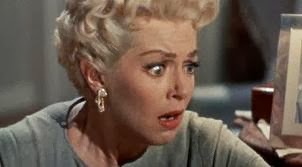
A mature, still arrestingly beautiful Lana Turner, gowned by Jean Louis and dripping in David Webb jewels, turns in a skilled, if mannered, performance as selfish actress Lora Meredith, who sacrifices both love and family for the sake of career ambition. In the early sequences, as Lora struggles financially, living in a downtown “coldwater flat” with daughter Susie, Turner adopts the long-haired 1940s coiffure that she sported in films a dozen years earlier, with close-ups lovingly photographed in ultra-soft focus. Later, her hairstyle becomes short and severe after her transformation into the toast of Broadway, an ego-driven diva still burning with ambition to conquer the silver screen. The intensity displayed by Turner’s character is a pantomime of genuine human emotion, designed to reach the back row of the theater, but nonetheless divinely, compellingly watchable. In one of the climactic mother-daughter confrontations that drive the plot of this classic “women’s picture,” a teenage Sandra Dee implores of Turner, “Oh, Mama, stop acting!” But the audience pleads silently--”No, Miss Turner, don’t stop. Please keep on chewing that scenery!”


Turner had developed a flair for this type of melodrama, having earned her only Oscar nod the previous year for Peyton Place. And of course, she was no stranger to off-screen drama and tragedy, either. Just before beginning work on this film, sordid details of Turner’s private life had been splashed across the tabloid pages after her lover Johnny Stompanato had been stabbed to death, reportedly by daughter Cheryl Crane, during a domestic dispute. The scandal boosted publicity for Imitation of Life (with its eerily paralllel mother-daughter plot angles) making it one of the top grossers of 1959.


But beneath the veneer of melodrama and flamboyant production values is a storyline with a soupçon of substance, dealing head-on with one of the chief issues of the time...racial injustice and prejudice. Juanita Moore’s touching and understated performance as Annie Johnson strikes the film’s sole note of reality (erasing the offensive image of Louise Beavers as the Aunt Jemima-like pancake lady in the original 1934 version). Amid the bombast of practically every other performance, Moore quietly underplays, modulating her voice to a soothing whisper as she selflessly looks after everyone but herself, offering comfort and wisdom but suffering silently.

Susan Kohner (better known today as the mom of filmmaking brothers Chris and Paul Weitz of American Pie fame) is much more showy in her role Annie’s rebellious fair-skinned daughter, tortured and embittered by a life of always staying “in the back.” Best Supporting Actress Oscar nominations went to both Moore and Kohner for their very different approaches to the material.

But even the racial angle of the story is not immune to Douglas Sirk’s ostentatious, presentational style. Kohner’s Sarah Jane works in “low-down dirty dives” and morally corrupt nightclubs, even lip-synching a song with a highly sexual double entendre, likening an empty purse to a feature of the female anatomy and imploring the sleazy crowd to “fill what is empty.”   Earlier, a young Troy Donahue beats the hell out of Kohner’s character in a startlingly violent and over-the-top manner after asking, “Is it true...is your mother a n****r?”

And the final funeral sequence is pure fantasy, with four white horses, a New Orleans blues band and of course, the iconic Mahalia Jackson singing “Trouble of the World.” (Look for an homage to this sequence in Mike Nichols’s brilliant film of Tony Kushner’s Angels in America.) Of course, here is where Sirk gives Miss Kohner the opportunity to throw herself over the coffin of her dead mother and beg for forgiveness, something we in real life very rarely do. But it is a surprisingly effective catharsis...if you are in the right mood, you will cry right along with mourners Susan, Lana, John and Sandra. I know I always do.


Imitation of Life is an artfully constructed and captivating film that’s a feast for the senses and emotions, presented by a masterful auteur. It provides a glorious opportunity to while away a lazy afternoon with a pint of Haagen Dazs, and escape your own real-life “troubles of the world,” knowing that even the rich and beautiful have issues, too, though in Douglas Sirk’s world, they do their suffering in in mink.


Thursday, November 21, 2013

Raving Bloody Lesbians


Alcoholic, paranoid and nearly desperate at the thought of losing her long-running role on a BBC TV series, an aging actress lashes out at the world in general, and her much-younger female lover in particular. It’s a plot pregnant with dramatic possibilities, and The Killing of Sister George (1968) explores them all in frank and often explicit detail.


“Not all girls are raving bloody lesbians,” young Alice tells her jealous lover during one of their many altercations, but in this film’s insulated world, the vast majority are. This is far from just a movie about homosexuality, however. It’s a cautionary tale about the cutthroat world of show business and the terrors of growing old and being alone, set against the backdrop of the swinging mod London of the late 1960s and seen through the lens of sharply drawn female archetypes.


Beryl Reid in the title role


Directed by the legendary American auteur Robert Aldrich and based on the stage hit by British playwright (and theater critic) Frank Marcus, Sister George is as absorbing in its portrayal of the cynical world of TV production, where bustling, behind-the-scenes backstabbing is the bill of fare at the BBC, as it is when exploring the intimate moments of women in love and in conflict.  


As June Buckridge, aka Sister George, the beloved spinster character she plays on Applehurst (think Coronation Street or East Enders), Beryl Reid is at turns humorous, tragic, wistful, spiteful, warm and outrageous, but always compelling and endearingly human. Reid, a one-hit wonder whose film career never took off despite this legendary performance, commands the screen with her fully realized and in-depth characterization. Though the film, with its then-considered-unsanitary subject matter, was shunned by the Oscars (Oliver! was chosen that year’s Best Picture), Reid did receive a Golden Globe nomination as Best Actress for her tour de force portrayal.

Susannah York as Alice
The beautiful Susannah York aces the difficult role of Alice, the child-woman who chafes against George’s smothering and mood swings yet plays Virginia Woolf-worthy mind games herself and is not as innocent (or young) as she professes. The minute she meets the successful BBC program director Mrs. Croft (who pays a visit to George to rake the actress over the coals for unprofessional behavior), Alice makes plans to hitch her wagon to the high-powered lady executive and ditch her falling soap opera star lover. With her pixie hairdo (the rage of 1968 for gamines like York, Goldie Hawn and Mia Farrow) and soulful doe eyes, York’s performance is a skillful blend of intensity and vulnerability.


Coral Browne as Mercy Croft
The smug, uptight and terribly upper-crust BBC program director Mercy Croft is played with venomous finesse by the versatile character actress Coral Browne, best known for her iconic role as Vera Charles in Auntie Mame (and as the wife of the great Vincent Price). But here, as the frosty middle-aged widow whose latent tendencies are stimulated by George’s pretty blond flatmate, Browne is given her juiciest role ever, culminating in one of the most startling and searing sex scenes ever put on mainstream film up to that time. Far from a Penthouse soft-focus girl-on-girl fantasy, the love scene between the older and younger woman, as staged by Aldrich under unforgiving lighting in unrelenting close-up, is as much a ghoulish nod to his grand guignol roots (Whatever Happened to Baby Jane and Hush, Hush, Sweet Charlotte) as it is unexpected eroticism.


Chock full of irony and wit, not to mention loads of bitchy and catty repartee, Sister George is the female version of Boys in the Band, ground-breaking for its time and still eminently watchable.